Showing posts with label irrigation. Show all posts

Tuesday, November 6, 2018

Prime's Clippings November 2018

False Foxglove, an unusual fall wildflower
Agalinis spp.
False foxglove, an unusual fall wildflower


Pleasant Fall Days?


October started with another hot and dry week but then went crazy. More records, but instead of heat we set new record lows for October coupled with record non-stop rains. It rained for seven days in a row, with even more scattered throughout the month! Not exactly the pleasant fall weather we were looking for. Our normal first freeze date is usually around Thanksgiving, and hopefully we can see some nice weather between now and then.

I talk about the weather a lot in these newsletters, but it is the most important  factor in what we can do and what we can expect in our gardens. And although we have long considered north Texas a land of extremes, our weird weather events are becoming more extreme and more frequent.

I think a good gardening philosophy from here on out would be to hope for the best and expect the unusual.  


Happy Thanksgiving!
Our offices will be closed Thursday, Nov. 22nd and Friday, Nov. 23rd for the Thanksgiving holiday.


Residential Mowing Clients- Please Read This!

With lawns growing slowly now and leaves starting to fall, we will mow most properties one—two more times in November and then stop.

Please call or email to let us know if you need leaf clean ups or additional mowing in November and December!

And with cool weather settling in earlier than normal this year, please let us know when to stop services for the fall. We maintain several hundred properties, and they all have different needs. Some folks don’t have trees or leaves. Some like to wait until most of the leaves are down before cleaning them up. And some folks prefer to have their sidewalks blown and leaves mulched up every week.

We do not let our crews decide which yards can be skipped on their list — all their work orders must come through our office.

Every year we like to remind our clients about how we handle leaf clean ups. Mulch mowing them into the lawn is the most cost effective way of dealing with them as long as they are mowed regularly and are not too deep. But when there are accumulations and we spend extra time to clean them up we bill hourly.

We appreciate your business, and we will always try to work as quickly as we can to keep the cost reasonable, but please note:
  • WE BILL HOURLY FOR LEAF CLEAN-UPS
  • OUR HOURLY RATE IS $38.00 PER MAN, PER HOUR
  • WHEN WE HAVE TO BAG LEAVES WE ONLY USE PLASTIC BAGS
  • IF YOUR CITY DOES NOT PICK UP PLASTIC BAGS THERE WILL BE AN ADDITIONAL FEE FOR HAUL OFF AND DISPOSAL
*Not applicable to properties that are on pro-rated 12 month contracts that include leaf removal


Daylight Savings Reminders- Don't Forget Your Sprinklers
After this crazy rainy spell and with cool weather moving in, turn off the sprinklers! Make sure your new shrubs, trees, rye grass, and pansies get watered in adequately, but lawns will need very little water from now until next summer. Except is the case of a dry spell and hard freezes this winter, I would not water lawns or established shrubs any more. And pansies thrive with minimal water once rooted.

Brown PatchBrown patch will be occurring now after all the rain in quite a few St Augustine lawns. Watch for brown circular areas in your lawn. If wet conditions persist this fungus can spread and cause damage to your turf.

You may also see signs of Take All root rot in St Augustine. In the fall you will see sporadic yellow patches throughout, and dead patches form from spring into summer. There is no full cure for this devastating disease, but a fungicide treatment and applications of peat moss and sulfur to increase acidity are the recommended controls.

Remember to adjust the clock on your sprinklers and replace the batteries in your smoke detectors and sprinkler controller on the weekend that we roll our clocks back for daylight savings time.

It's an easy way to remember this simple chore. Not all sprinkler controllers have a replaceable battery. If you aren’t sure whether or not yours does, call us for the answer. And if you have landscape lighting, you may need to adjust the timer on that system as well.

Another smart thing to do this time of year is test your rain/freeze sensor. Verify after one of these rains that your red light is on and the controller is inactive. As soon as the temperature drops below 40 the light should also come on to keep the clock from running and creating an ice hazard for cars or pedestrians. This is especially important for commercial properties due to the high liability they may incur, and rain/freeze sensors are required by law for all sprinkler systems.

So if yours is not working properly or if your system is so old that it doesn’t have one call us to schedule a service call.

Unfortunately rain sensors are not always reliable, but they are still better than not having a sensor at all. And except for newly planted shrubs, flowers, or sod, you may turn your sprinklers off until summer. 


Bird Feeding in the Fall


Fall is a great time in north Texas to enjoy birds at your feeders. The migrations can provide an opportunity to see unique birds that may only be here for a short time. Keeping a feeder or two stocked and a source of water can also help supply the birds with the energy they need for their long and arduous journeys. Suet is a particularly good energy source for the birds, and will keep our year-round residents coming to feed all winter too. There will probably still be hummingbirds moving through, so leave a feeder out for them as well until really cold weather moves in.

Bird at feeder.We have a great assortment of year-round residents that appreciate the extra forage in winter— cardinals, chickadees, wrens, dove, titmice, downy woodpeckers, jays, and red bellied sapsuckers to name a few. But a bird feeder has the potential to attract numerous other species that may only be passing through. Watch for juncos, cedar waxwings, yellow rump warblers, red breasted nuthatches, goldfinches, orange crowned warblers, and more.

Be sure your feeders are located in an area convenient for viewing and pick up a good identification guide. Different seed blends can attract different species, and many of our ornamental shrubs provide forage for certain species too—cedar waxwings are famous for lighting on a mahonia in late winter and quickly removing the ripe fruits. A flurry of activity like this adds interest and excitement to any garden. And add a thistle feeder in late winter to attract goldfinches, and watch as they change to a bright yellow as spring approaches.

There are many good choices of plants for your landscape that provide forage as well, and it is important to include native plants. Studies have shown that loss of native plants due to development is adversely affecting native bird populations dependent on specific plants. A great source of information on birding can be found at your local Audubon Society, www.FWAS.org


November Chores


  • Mulch mow leaves as they fall
  • Treat fire ants with baits
  • Mow over-seeded rye lawns as needed
  • Apply granular sulfur to buffer our alkaline soils
  • Change batteries in smoke detectors and your sprinkler controller when you change your clocks to daylight savings
  • Don’t forget to feed the birds!


Patrick Pidgeon, Design and Sales- Landscape, Maintenance, and Pools

Patrick Pidgeon
Design and Sales
Landscape, Maintenance, Pools


Our goal is to fulfill the needs of the customer by providing timely, quality services and products.

Thanks for your business!

Thursday, March 1, 2018

Annual Backflow Testing

Did you know we provide Backflow testing and certification for commercial and residential clients in the greater Dallas Fort Worth area?

Backflow is a term in plumbing for an unwanted flow of water in the reverse direction and it can pose a serious health risk to our potable water supply. Backflow prevention devices come in the form of automatic check valves which are installed on plumbing lines. In the event of floods or other plumbing failures, the devices prevent contaminated water from flowing back up the lines and into the clean water supply.

Many cities in the metroplex already require annual testing of backflow devices and many more are implementing similar regulations in the next few years... so don't be too surprised when you get your  notice in the mail!

We test, service, and install most backflow devices, including double check valves (DCs, DCAs), reduced pressure zone devices (RPZs, RPs, RPPs, RPPDs), and pressure vacuum breakers, PVBs.

For 2018 our annual backflow tests start at $85 per device plus any required city fees, if applicable. We also offer bulk discounts for multiple devices. Our licensed irrigation techs can usually get you scheduled within 24-48 hours and we are happy to provide same day service when possible.

If you've got water lines, you've probably got backflow devices, and when your backflow devices need testing, pick up the phone and call Prime Landscape Services at (817)461-4000... or email us!

Monday, July 3, 2017

Prime's Clippings July 2017


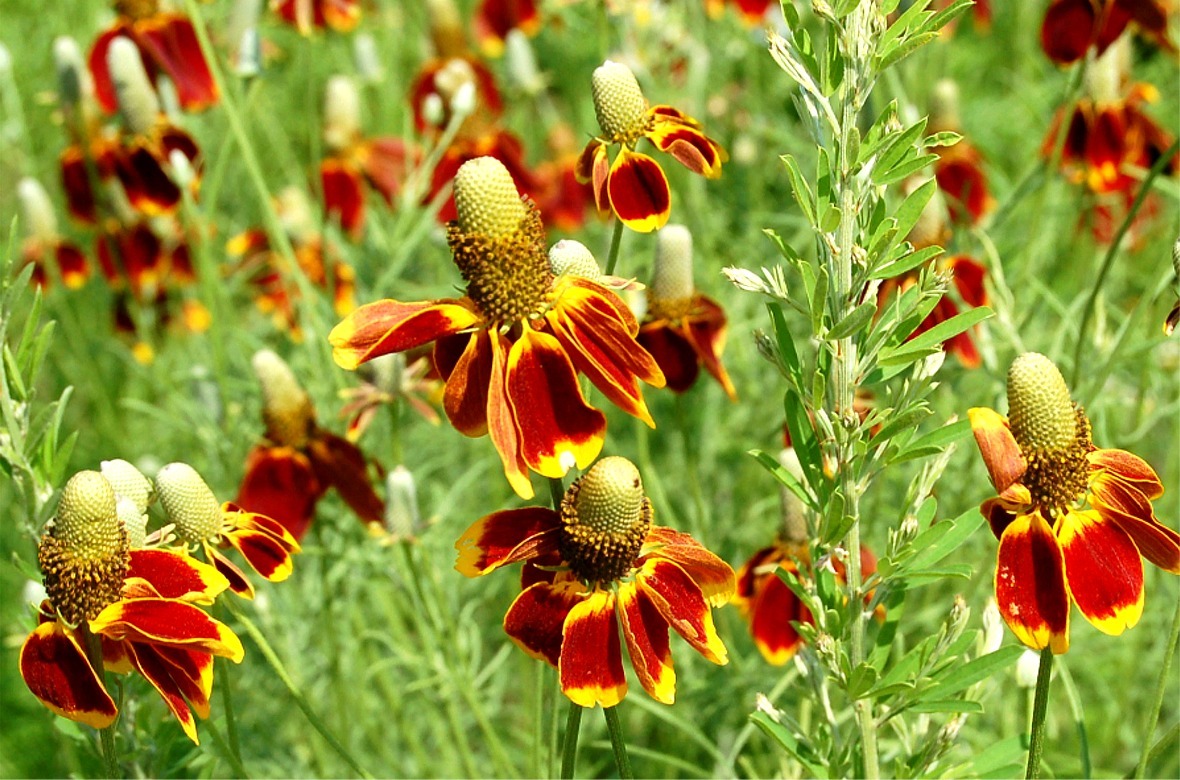
Ratibida Columnaris- Mexican Hat - a prominent summer wildflower


A Nice Start to Summer


We have finally erased the deficit on our annual rainfall total, making up for a dry May with several inches in June. That really helped our soil moisture levels and our lakes are in pretty good shape. Plus we had a bonus on June 24, the fifth day of summer, with a cold front that kept our high temperature under 80 degrees! I’ll give June 2017 an A.

Here’s a fun fact: The high on June 24th was 10 degrees lower than the record high set in the dead of “winter” on Feb. 11 when we hit 88. Okay, I’m wearing everyone out with weather trivia, but this lack of normal patterns plays heck with our gardens. We coupled the warmest winter on record in DFW —great for insect pests, with a couple of 14 degree days in early January that burned crapes and other plants. So what does the rest of summer hold? If the first six months are any clue, who knows?

We can likely count on 2 months of hot, dry weather and a need to supplement Mother Nature’s blessings with regular water from our sprinkler systems. With that in mind, read on for a primer on how your sprinkler system works, and how to get the most out of it.

Horsemint- A wildflower that loves the heat and is great forage for honey bees.


Sprinkler Systems 101
(most likely a lot more than you want to know, but not nearly as much as we could tell you!)


Thanks to Murphy’s Law, it seems that right when you need your sprinkler system the most is also when it is most likely to break down.  Unlike changing the oil in your car, there isn’t a whole lot of preventive maintenance you can perform on your sprinklers, but routine inspections are extremely important.

A typical sprinkler system starts at the backflow device, which is usually in a large box located a few feet from your water meter. There are 2 handles here which are used to turn the water off to the sprinklers without affecting the water to your house.  Silt often accumulates around this valve and the handles corrode, making it difficult to turn off the water in an emergency. We recommend cleaning out the silt once a year and replacing your handles with stainless steel handles. Stainless handles will last forever.

Your control valves are located throughout the yard and have an electric solenoid and rubber diaphragm. These parts fail over time, the wire splices may corrode, and fire ants eat the insulation off the wires. If a valve is not coming on it is often an electrical problem. If it sticks on and runs continuously, it is usually a bad diaphragm or debris may have lodged in the valve. In most cases, we rebuild the valve with all new components, or replace the valve entirely if there is internal wear or other issues. Spray heads are typically used for patterns of 4 ft up to 15 ft, rotors for patterns of 15 ft to 40 ft, drip irrigation for ornamental beds or pots, and bubbler heads for trees, large plants, or large pots. Pop-up sprays and rotors have seals that harden with age and leak or prevent the head from lowering after it pops up. This is the main reason heads get broken by mowers. Properly installed, a head that is working properly cannot be hit by a mower. If you see a lot of water pooling around a head when it is running it may have a bad seal. Spray nozzles also become clogged, and heads settle so that they are crooked, too low, or too high. Drip is notorious for being damaged by digging in beds, and rodents also love to chew on drip. Correcting these issues is all part of routine maintenance. Your controller is the brain of the system, and most of today’s controllers have sophisticated settings that allow you to optimize how and when you apply water. Like any computer, they may be damaged by power surges, lightning, or gremlins. But what is the first thing you always check when your controller isn’t working? The electrical outlet! Plug something else in and make sure you have electricity there. If so, then you can call us to come look for the gremlins.

Sprinkler system scheduling: Okay, this is a subject that can get very involved. There are formulas for calculating how much water you may need using actual rainfall amounts, evapostranspiration rates for your lawn or different types of ornamentals, soil types, slope, micro climates, etc. And the truth is that most sprinkler systems are not perfectly designed. There's lots of really good ones, but an equal number with coverage issues. In fact, most spray zones have an efficiency rating of only 60% and rotor zones 70%.


So, for the average property owner with the average system, here are some easy to follow guidelines:
  • Most weeks in summer we need to apply about 1 inch of water to our yards. 
  • A spray zone applies about 1.5 inches in an hour.
  • A rotor zone applies about .5 inches per hour.
  • A drip zone applies about 1 inch per hour, but drip can vary considerably because there are so many different products and ways to design it.
So, you will need to run your sprays about 40 minutes a week, your rotors for 2 hours, and your drip 1 hour. Maybe a little more according to how efficiently they are working.

For lawns and established shrubs it would be ideal to apply all that water at one time so you get a really deep soaking, encouraging deeper roots. But flowers, new plantings, and some common plants like hydrangeas and caladiums need water more than once a week. For ease of programming, and to cover the variety of plants that you may have, most properties should be set up to water two to three times per week.

So now we have a  twice a week schedule that looks like this:
  • Spray zones 20 minutes, Rotor zones 60 minutes, Drip zones 30 minutes

And here is the last tweak that is not difficult and will really help you get the most out of your water. Except for some lucky folks (like me) that live in a narrow sandy band of the Cross Timbers that runs through north Texas, most of us have clay or clay-loam soils. These soils are tight and accept water very slowly. That means that your water will start running off after just a few minutes of watering. How to solve this problem? Set your sprinklers to run twice in one cycle, using half the water each time. Some controllers have a built in Cycle/Soak function that you can program, but all controllers have the ability to let you set two or more start times. That is a really simple way to get more water to soak in.

Lets say you have 4 spray zones, 2 rotor zones, and 1 drip zone.
What is the total run time needed?
  • 4 zones x 20 minutes = 80 minutes, 2 ones x 60 minutes = 120 minutes, and 1 zone x 30 minutes for a total of 230 minutes or about 4 hours.
  • Set your sprays for 10 minutes, your rotors for 30 minutes, and drip for 15 .
  • Set your first start time for 12:00 AM, then set a second start time for 4:00 AM
That gives your first cycle a chance to soak in and you will have less water running down the gutter! This also works well for watering on slopes.

Again, these are basic guidelines. You may have shady areas that need less than hot sunny areas so adjust those times down. Or a big bed of begonias that may struggle with watering just twice a week in the heat of summer, so you could add a “B” program for an extra day to water just that zone.

As I said at the beginning, this can get very involved. You can follow these guidelines, or consult with us further if you really want to see how much you can do to keep more of your water going where you want it—the roots of your plants.

You are welcome to email questions to me at:
John@primelandscapeservices.com
Texas Licensed Irrigator #0004812


The Big Email Push

Experts agree, e-mail is the only way to go!

Once again, we are reminding everyone to sign up to “Go Green” and start receiveing your invoices and newsletter via e-mail. We do not share your address with anyone, and we do not send out e-mail blasts soliciting your business.

You can also pay with your favorite credit card if you prefer.

Just call Olivia at 817-461-4000 to set it up.

Better yet, send an e-mail to: contactus@primelandscapeservices.com

Thanks!


July Chores


  • Mow Weekly
  • Finish planting summer flowers
  • Mulch beds
  • Treat new fire ant mounds after rains
  • Watch for chinch bugs in the lawn
  • Treat for grub worms
  • Check sprinklers


Our goal is to fulfill the needs of the customer by providing timely, quality services and products.
Thanks for your business!


John Hoover, General Manager

Tuesday, December 6, 2016

Prime's Clippings December 2016

Merry Christmas and Happy Holidays from all of us at Prime Landscape


Leaf Clean-Ups and Winter Maintenance

With December upon us the mowing season has come to a close and we have officially entered the Leaf Clean-Up Season! Leaves are particularly heavy this year, some are falling fast and others clinging to the trees, and with rainy conditions our scheduling will be erratic.

This year we are asking all residential customers to call in to request their leaf clean ups.


Due to the additional time it takes for mowing, mulching, raking, and bagging up leaves, we will be charging our hourly rate of $114 per hour for a 3 man crew for ALL lawn services during the winter months.


Of course, there will be no additional charge for our 12 month contract customers for regular contract services.


Please call or email us at your earliest convenience to request leaf clean ups. We will need a one week notice in most cases to get you on the schedule.


Winter Interest in the Garden

Some of us truly love winter, especially the mild type that we usually see here in north Texas. We have ample opportunities to enjoy our outdoor spaces, but with the dormant season it can be challenging to maintain attractive, interesting settings.

Hollies and nandinas are often taken for granted, but in winter they can be big players with glossy green or red foliage and red berries, and of course they are a summer landscape staple as well. Several shrubs will bloom during the winter months. Include a few quince, camellia, mahonia, and winter flowering honeysuckle for periodic flowers. Certainly pansies and violas are the stars of winter, and an over-seeded lawn of lush rye grass really sets off flowers and shrubs. A water feature such as a fountain or waterfall entices the senses year- round, and brings a special excitement during hard freezes when impromptu ice sculptures form.

The outdoor living craze has brought the element of fire back into the landscape in a variety of forms, from fireplaces to fire pits to chimineas. Now is the time to really make use of these accessories.

And don’t forget to hang a few bird feeders for a stream of colorful, busy visitors all winter.  Fill your yard and your life with interest!


Pool Services Available


We offer monthly pool services at competitive prices!


December Chores


  • Prune dormant perennials and banana trees
  • Clip fresh red berries from hollies, nandina, and pyracantha for winter decorating
  • Clean up leaves
  • Transplant shrubs and trees
  • Insulate outdoor hose bibs
  • Plant Spring bulbs
  • Wrap palms for winter protection


Thursday, November 10, 2016

Prime's Clippings November 2016


Time To Order Bulbs!  

If you want a beautiful spring show of annual tulips, daffodils, paper whites or jonquils, now is the time to order them! Tulips are $90 per 100 bulbs installed, and daffodils are $1.50 each with a minimum of 100 bulbs. We will be picking up our bulb orders this month and start planting after Thanksgiving. Call to place your order today!

Not sure what to plant? Email john@primelandscapeservices.com


Winter Can Wait

I know, I know, it’s November, but- this is Texas! Our fall weather is just getting started! It’s possible we might get our first freeze around Thanksgiving, but in general we can expect more mild weather for the next 2 months.

We haven’t seen a lot of rain this October, but there’s been a few good soaks. In spite of the cooler temperatures overall, it’s remained pretty warm during the day these last couple weeks with temps in the mid-high 80s, but hopefully that is about to change.

This is a great time to get plants in the ground and give their roots a chance to develop through the winter, but keep them well watered until we get more regular rain fall. We have pansies going in all month long, so please call or e-mail us at contactus@primelandscapeservices.com if you’d like to schedule your fall color.

It’s pretty splendid weather for doing outdoor chores, but if you aren’t big on chores, remember that’s what we’re here for! So dig this fall weather and leave the real diggin’ to us.


Pansies and Violas are going in now! 


Call to schedule! 


Residential Mowing Clients - Please Read This!

With lawns growing slowly now and leaves starting to fall, please call us if you’d like to make changes to your mowing schedule!

If you do not want your yard mowed, let us know. We maintain several hundred properties, and they all have different needs. Some folks don’t mind letting leaves gather for a few weeks before cleaning them up and some folks prefer to have their sidewalks blown and leaves mulched up every week.Therefore, we do not let our crews decide which yards can be skipped on their list — all their work orders must come through our office.

Crews are paid for every minute of the day, and gas is expensive.

If you do not call in to cancel by 5:00 PM the day before and our crew comes to your house on your regularly scheduled day, you will be charged—no exceptions. 


AND IF YOU HAVE TREES, PLEASE READ THIS!


Every year we like to remind our clients about how we handle leaf clean ups. Leaves are starting to fall, and mulch mowing them into the lawn is the most cost effective way of dealing with them as long as it is done regularly. Soon there will be some really heavy leaf drops and we may need to spend extra time to clean them up if you have a lot of trees. We appreciate your business, and we will always try to work as quickly as we can to keep the cost reasonable, but please note:

WHEN A CREW HAS TO SPEND MORE TIME THAN THEY WOULD FOR A REGULAR LAWN MOWING, WE WILL BILL YOU HOURLY FOR THE CLEAN UP SERVICE.OUR HOURLY RATE IS $38.00 PER MAN HOUR.


(Not applicable to properties that are on pro-rated 12 month contracts that include leaf removal) 


Daylight Savings Reminders

Don't Forget Your Sprinklers!

We haven't seen a ton of rain coming into November, but the cooler temperatures mean we still don't need to run those sprinklers quite as much as we did a month or two ago. Make sure your new shrubs, trees, rye grass, and pansies are getting watered in adequately, however, be careful not to let your soil become too saturated as roots will actually suffer until they dry out a little.


We've seen quite a few yards this month where sprinklers weren't cut back and soil conditions were perfect for lawn diseases like brown patch. If you notice brown circular areas in your lawn call us for a treatment. If wet conditions persist this fungus will spread and cause serious damage to your turf. 


You may also see signs of Take All Patch in St Augustine. There is no full cure for this devastating disease, but a fungicide treatment and applications of peat moss and sulfur to increase acidity are the recommended controls.

Remember to adjust the clock on your sprinklers and replace the batteries in your smoke detectors and sprinkler controller on the weekend that we roll our clocks back for daylight savings time. It's an easy way to remember this simple chore. Note, not all sprinkler controllers have a replaceable battery. If you aren’t sure whether or not yours does, call us for the answer.


Another smart thing to do this time of year is test your rain/freeze sensor. Verify after one of these rains that your red light is on and the controller is inactive. As soon as the temperature drops below 40 the light should also come on to keep the clock from running and creating an ice hazard for cars or pedestrians.
This is especially important for commercial properties due to the high liability they may incur, and rain/freeze sensors are required by law for all sprinkler systems. So if yours is not working properly or if your system is so old that it doesn’t have one call us to schedule a service call.


Fall Water Garden Services

Leaves are dropping regularly and are probably the biggest challenge in maintaining a naturalistic water feature.
It is important to empty the skimmers and keep the leaves scooped out regularly. Clogged skimmers cause a myriad of problems, cutting off flow to the pump, and causing fill valves to run excessively since the water level drops in the skimmer.

Since water plants are starting to go dormant, one solution for shaded ponds is to cover the pond with a leaf net using tubing to suspend the net off the water. We can custom fit a leaf net system to virtually any pond. 


Email spencer@primelandscapeservices.com for more details.


November Chores:

  • Mulch mow leaves as they fall
  • Treat fire ants with baits
  • Mow over-seeded rye lawns weekly
  • Apply granular sulfur to buffer our alkaline soils
  • Change batteries in smoke detectors and your sprinkler controller when you change your clocks to daylight savings
  • Don’t forget to feed the birds!


Thursday, July 2, 2015

Things You Should Know About Your Sprinkler System

Thanks to Murphy’s Law, it seems that right when you need your sprinkler system the most is also when it is most likely to break down. Understanding the basics of how your sprinklers work can help you use them more efficiently and know how to spot potential problems. Unlike changing the oil in your car’, there isn’t a whole lot of preventive maintenance you can perform on your sprinklers. However, routine inspections are extremely important.

A typical sprinkler system starts at the backflow device, which is usually in a large box located a few feet from your water meter. There are 2 handles here which are used to turn the water off to the sprinklers without affecting the water to your house. Silt often accumulates around this valve and the handles corrode, making it difficult to turn off the water in an emergency. We recommend cleaning out the silt once a year and replacing your handles with stainless steel handles. Stainless handles will last forever.
Your control valves are located throughout the yard  and have an electric solenoid and rubber diaphragm. These parts fail over time, the wire splices may corrode, and fire ants eat the insulation off the wires. If a valve is not coming on it is often an electrical problem. If it sticks on and runs continuously, it is usually a bad diaphragm or debris may have lodged in the valve. In most cases, we rebuild the valve with all new components, or replace the valve entirely if there is internal wear or other issues.

We typically use spray heads for patterns of 4 ft up to 15 ft, rotors for patterns of 15 ft to 40 ft, drip irrigation for ornamental beds or pots, and bubbler heads for trees, large plants, or large pots. Pop-up sprays and rotors have seals that harden with age and leak or prevent the head from lowering after it pops up. This is the main reason heads get broken by mowers. Properly installed, a head that is working properly cannot be hit by a mower.  If you see a lot of water pooling around a head when it is running it  may have a bad seal. Spray nozzles also become clogged, and heads settle so that they are crooked, too low, or too high. Drip is notorious for being damaged by digging in beds, and rodents also love to chew on drip. Correcting these issues is all part of routine maintenance. 

Your controller is the the brain of the system, and most of today’s controllers have sophisticated settings that allow you to optimize how and when you apply water. Like any computer, they may be damaged by power surges, lightning, or gremlins. But what is the first thing you always check when your controller isn’t working? The electrical outlet! Plug something else in and make sure you have electricity there. If so, then you can call us to come look for the gremlins.