Showing posts with label fall. Show all posts

Tuesday, November 6, 2018

Prime's Clippings November 2018

False Foxglove, an unusual fall wildflower
Agalinis spp.
False foxglove, an unusual fall wildflower


Pleasant Fall Days?


October started with another hot and dry week but then went crazy. More records, but instead of heat we set new record lows for October coupled with record non-stop rains. It rained for seven days in a row, with even more scattered throughout the month! Not exactly the pleasant fall weather we were looking for. Our normal first freeze date is usually around Thanksgiving, and hopefully we can see some nice weather between now and then.

I talk about the weather a lot in these newsletters, but it is the most important  factor in what we can do and what we can expect in our gardens. And although we have long considered north Texas a land of extremes, our weird weather events are becoming more extreme and more frequent.

I think a good gardening philosophy from here on out would be to hope for the best and expect the unusual.  


Happy Thanksgiving!
Our offices will be closed Thursday, Nov. 22nd and Friday, Nov. 23rd for the Thanksgiving holiday.


Residential Mowing Clients- Please Read This!

With lawns growing slowly now and leaves starting to fall, we will mow most properties one—two more times in November and then stop.

Please call or email to let us know if you need leaf clean ups or additional mowing in November and December!

And with cool weather settling in earlier than normal this year, please let us know when to stop services for the fall. We maintain several hundred properties, and they all have different needs. Some folks don’t have trees or leaves. Some like to wait until most of the leaves are down before cleaning them up. And some folks prefer to have their sidewalks blown and leaves mulched up every week.

We do not let our crews decide which yards can be skipped on their list — all their work orders must come through our office.

Every year we like to remind our clients about how we handle leaf clean ups. Mulch mowing them into the lawn is the most cost effective way of dealing with them as long as they are mowed regularly and are not too deep. But when there are accumulations and we spend extra time to clean them up we bill hourly.

We appreciate your business, and we will always try to work as quickly as we can to keep the cost reasonable, but please note:
  • WE BILL HOURLY FOR LEAF CLEAN-UPS
  • OUR HOURLY RATE IS $38.00 PER MAN, PER HOUR
  • WHEN WE HAVE TO BAG LEAVES WE ONLY USE PLASTIC BAGS
  • IF YOUR CITY DOES NOT PICK UP PLASTIC BAGS THERE WILL BE AN ADDITIONAL FEE FOR HAUL OFF AND DISPOSAL
*Not applicable to properties that are on pro-rated 12 month contracts that include leaf removal


Daylight Savings Reminders- Don't Forget Your Sprinklers
After this crazy rainy spell and with cool weather moving in, turn off the sprinklers! Make sure your new shrubs, trees, rye grass, and pansies get watered in adequately, but lawns will need very little water from now until next summer. Except is the case of a dry spell and hard freezes this winter, I would not water lawns or established shrubs any more. And pansies thrive with minimal water once rooted.

Brown PatchBrown patch will be occurring now after all the rain in quite a few St Augustine lawns. Watch for brown circular areas in your lawn. If wet conditions persist this fungus can spread and cause damage to your turf.

You may also see signs of Take All root rot in St Augustine. In the fall you will see sporadic yellow patches throughout, and dead patches form from spring into summer. There is no full cure for this devastating disease, but a fungicide treatment and applications of peat moss and sulfur to increase acidity are the recommended controls.

Remember to adjust the clock on your sprinklers and replace the batteries in your smoke detectors and sprinkler controller on the weekend that we roll our clocks back for daylight savings time.

It's an easy way to remember this simple chore. Not all sprinkler controllers have a replaceable battery. If you aren’t sure whether or not yours does, call us for the answer. And if you have landscape lighting, you may need to adjust the timer on that system as well.

Another smart thing to do this time of year is test your rain/freeze sensor. Verify after one of these rains that your red light is on and the controller is inactive. As soon as the temperature drops below 40 the light should also come on to keep the clock from running and creating an ice hazard for cars or pedestrians. This is especially important for commercial properties due to the high liability they may incur, and rain/freeze sensors are required by law for all sprinkler systems.

So if yours is not working properly or if your system is so old that it doesn’t have one call us to schedule a service call.

Unfortunately rain sensors are not always reliable, but they are still better than not having a sensor at all. And except for newly planted shrubs, flowers, or sod, you may turn your sprinklers off until summer. 


Bird Feeding in the Fall


Fall is a great time in north Texas to enjoy birds at your feeders. The migrations can provide an opportunity to see unique birds that may only be here for a short time. Keeping a feeder or two stocked and a source of water can also help supply the birds with the energy they need for their long and arduous journeys. Suet is a particularly good energy source for the birds, and will keep our year-round residents coming to feed all winter too. There will probably still be hummingbirds moving through, so leave a feeder out for them as well until really cold weather moves in.

Bird at feeder.We have a great assortment of year-round residents that appreciate the extra forage in winter— cardinals, chickadees, wrens, dove, titmice, downy woodpeckers, jays, and red bellied sapsuckers to name a few. But a bird feeder has the potential to attract numerous other species that may only be passing through. Watch for juncos, cedar waxwings, yellow rump warblers, red breasted nuthatches, goldfinches, orange crowned warblers, and more.

Be sure your feeders are located in an area convenient for viewing and pick up a good identification guide. Different seed blends can attract different species, and many of our ornamental shrubs provide forage for certain species too—cedar waxwings are famous for lighting on a mahonia in late winter and quickly removing the ripe fruits. A flurry of activity like this adds interest and excitement to any garden. And add a thistle feeder in late winter to attract goldfinches, and watch as they change to a bright yellow as spring approaches.

There are many good choices of plants for your landscape that provide forage as well, and it is important to include native plants. Studies have shown that loss of native plants due to development is adversely affecting native bird populations dependent on specific plants. A great source of information on birding can be found at your local Audubon Society, www.FWAS.org


November Chores


  • Mulch mow leaves as they fall
  • Treat fire ants with baits
  • Mow over-seeded rye lawns as needed
  • Apply granular sulfur to buffer our alkaline soils
  • Change batteries in smoke detectors and your sprinkler controller when you change your clocks to daylight savings
  • Don’t forget to feed the birds!


Patrick Pidgeon, Design and Sales- Landscape, Maintenance, and Pools

Patrick Pidgeon
Design and Sales
Landscape, Maintenance, Pools


Our goal is to fulfill the needs of the customer by providing timely, quality services and products.

Thanks for your business!

Monday, October 2, 2017

Prime's Clippings October 2017


Eryngo Leavenworthii, Leavenworth's Eryngo 
Often overlooked, but beautiful summer wildflower


Where is the Fall Y'all?


We had a pretty mild August but September stayed unseasonably hot, and the first week of October is going to stay in the nineties as well. At least we finished out September with some wide- spread rain.

As soon as we have consistent sweatshirt weather we can start changing out summer flowers to pansies for the winter. If it stays hot they tend to stretch and get aphids. If your summer color still looks good you can enjoy well into November, but it is always good to get pansies in the ground a week or two ahead of our first hard freeze so they have some roots developed.

And when will the first hard freeze occur? It can happen any time from November 20 to February. And if anyone could know that more than a few days in advance, they need to be sitting at a table in Vegas.

Along with milder weather October brings a modest list of gardening chores. Turf still needs to be mowed and leaves mulched up, flowers changed out, fire ants treated with bait products, fall pre-emergents and fertilizer applied, and tired summer perennials tidied up. But outdoor chores are always easier on a pleasant fall day.

Call or email us if you would like a catalog of winter color that will be available this year!


Pansies starting mid-October


Texas Trees for Fall Color

We all know that fall foliage in north Texas is not a big showstopper, but with the right weather conditions here are a few trees that can stand out.

Autumn Blaze Maple
one of the few maples suited for our area


Cedar Elm
a true native


Chinese Pistache
a well rounded, mid-size tree


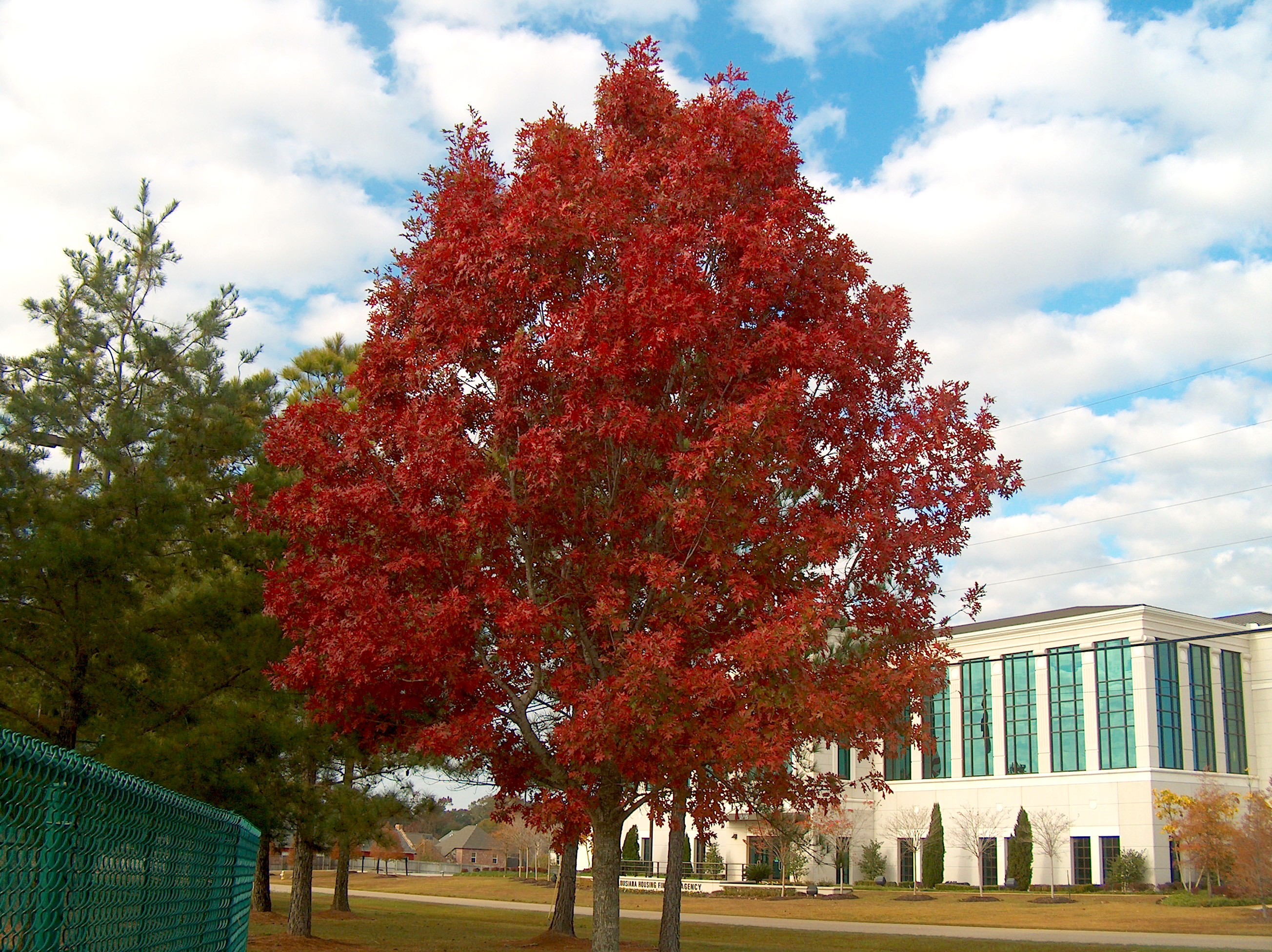
Shumard Red Oak
a native and widely planted tree; not to be confused with northern red oaks or pin oaks, both of which will not grow in our soils


Happy Halloween!


LED Christmas Lighting - Time to Plan Now!


I know, I know, we haven’t even gotten to Halloween yet and retailers are already pushing Christmas. We are not jumping on the marketing bandwagon, but since we are only taking a limited number of new properties for Christmas lighting, we want you to have the info you need to plan your project and get on the schedule. We continue to recommend Seasonal Source LED lighting.

Why Seasonal Source LED?
  • LED is green technology, consuming about 80% less electricity than traditional. You save money every year you use them.
  • Tired of testing your strings of lights every year only to find half of them don’t work anymore? Our lights are premium grade and ruggedly constructed with a 3 year guarantee.
  • Our LED lighting provides a dazzlingly bright display with brilliant jewel-like colors that never fade, chip, or scratch. You can choose from traditional warm-white to an array of festive colors.
  • LED are safe and cool to the touch.
  • Do more with less. Let’s compare the energy savings: On roof lighting, we typically use the C9 bulb. With LED, 100 ft of roof line will use less electricity than a single 100 watt light bulb. 100 ft of traditional incandescent Christmas lights will consume more power than a 600 watt microwave! When wrapping trees or columns with mini-lights, we can plug up to 300 23 foot long strings into one outlet! Compare with only 35 strings of traditional mini lights.

It's easy to see:

You can cover more area with a huge reduction in electrical costs, or increase your display without dangerously overloading your electrical circuits.


What do we provide?

We can provide everything for your outdoor display, custom designed to fit your home, including mini lights to wrap trees and shrubs, C9 roof lights, lighted wreaths and garlands, and all the jumpers, cords, and timer needed to make it all work. After Christmas, we will come out and place the lights in stackable storage boxes with tags and a diagram so that installation the following year will be easy to duplicate.

What does it cost?

We will measure your roof, trees, shrubs, sidewalks—whatever you want to highlight and provide an estimate and design suggestions. Once you have purchased your lights and supplies from us, we have a simple labor rate to cover installation and take down.

Labor
  • Lining driveways, sidewalks, etc.: $2.00 per ft
  • Single story roof lines: $3.00 per ft
  • Second story roofs: $5.00 per ft

Materials
  • C9 roof lights start at $2.75 per ft including wire and clips
  • Storage boxes are $10.00 or you can provide your own
  • Wrapping tree trunks, shrubs, etc.: 23 ft strings of M5 or G12 mini lights run $25.00 per string. If you already have the lights it is $6.00 per string for labor only.

For estimates, contact Mike Johnson.


Another of John's Favorite "Weeds"


You may have noticed tall white “weeds” showing up along our roadsides and pastures during the last few weeks. A closer inspection reveals that they are actually a beautiful euphorbia, Agaloma marginata or Snow on the Mountain. Similar to a poinsettia, the flowers are tiny and somewhat inconspicuous but are surrounded by showy white bracts with green stripes. Natives like these are important sources of nectar for pollinators like our endangered honey bees.


October Chores


  • Mow less often as the lawn slows down

  • Water once—twice a week as needed

  • Treat fire ants—bait products work well in Fall

  • Overseed rye and fescue grass

  • Apply weed pre-emergent and fertilizer

  • Sow wildflower seeds for spring 


Our goal is to fulfill the needs of the customer by providing timely, quality services and products.
Thanks for your business!


Spencer Young
Pool and Water Garden Services

Monday, August 28, 2017

Prime's Clippings September 2017

Lonestar Gumweed, grindelia adenodonta
Just a weed to most, beautiful when you take the time to look

 We will be closed Monday, September 4th 

 for Labor Day 


How Many Days 'til Fall?


August began nicely and was overall a fairly mild month. We certainly had our share of blistering humid days, but the scattered rains throughout north Texas have made this a very bearable summer. Up north, fall dependably begins in September when the kids head back to school. Around here, be prepared for another month or more of hot weather. Maybe we will get lucky though.

Regardless of the difficulty in predicting the onset of cooler weather, September and October are two very important months for north Texas gardeners.

Probably the most important chore coming up is the application of fall pre-emergent weed preventative to our lawns and beds. Equally important is a fall fertilization with a balanced product including potassium for the roots. Some gardening experts will tell you there is a perfect range of days in which to apply pre-emergent, but in truth that range can be quite extensive, and even applications outside of the peak period can be quite effective. But if you are a do-it-yourselfer, this is the single most important application you can make. Don’t forget to do it!

Some other nice things about this time of year are fall veggie gardens and planting new shrubs, trees, and grass. We are on the tail end of planting fall vegetables, but you can still have some success with crops from seed like lettuce, spinach, kale, peas, radishes, and carrots, and even broccoli, cabbage, brussel sprouts, cauliflower and tomatoes if you can find them potted in the nursery.

Milder weather will start to set in, so get ready to enjoy a great time of year.


Late Summer Lawn and Garden Care

The time to treat for grub worms is passing, but treatments will still be effective if done in the next few weeks. Grubs do some of their worst damage in the fall but as soils cool they stop feeding and move deeper into the soil, becoming harder to control.

We are still several weeks from lawns starting into dormancy so continue to mow weekly and water regularly. See the tips above regarding fall pre-emergent and fertilizing. You may make applications at any time now and into October.

Roses, if you are lucky enough to have some that have not fallen victim to rosette disease, benefit from a light pruning in late August or early September. We often have a great rose bloom in October.

Avoid trimming spring blooming plants like azaleas and spiraeas any more this year as you may be removing spring blooms. Also avoid high nitrogen fertilizers on spring bloomers, but you can still use balanced fertilizers and especially iron or acidifiers for chlorotic plants.

If we get into a wet spell, watch for lawn diseases like brown patch (later) or gray leaf spot (now), and powdery mildew, fungal leaf spot, and scale insects on shrubs. Treat as needed depending on severity so your lawn and plants go into winter healthy and happy.


Time for Rye and Fescue Seeding

Time for our annual reminder about over-seeding your lawn with ryegrass. A lush green winter lawn creates a nice foreground or background for early spring flowers like azaleas and spiraeas, and sets your home or business apart from the crowd. Over-seeded lawns normally have fewer winter weed issues as weed seeds have a difficult time germinating in the thick green cover provided by healthy turf. Typical winter weather usually brings enough rainfall to keep your rye green with little or no watering once established.

There are two types of rye seed available, annual and perennial. Annual rye seed is the one most commonly used but will need to be mowed every week in the spring. Perennial rye is more refined, with a darker green color and slower rate of growth, is more difficult to germinate. In our area the term perennial is not accurate. Most rye burns out by June. In shady areas or if we have prolonged cool, wet weather into the summer, ryegrass may persist longer.


The normal preparation for over seeding is to mow the lawn a few notches lower and remove the clippings during the last half of September through October. This allows the seed to make better contact with the ground and improves germination. Depending on rainfall, the seed should be watered several times a week until it is up and growing. In about two weeks, lightly touch up any thin areas. Once it is up, mowing will vary depending on the weather and type of seed used, but once every 2-3 weeks is usually the norm until about March. Light fertilizing in December will enhance the appearance.

Pricing: Scalping, over-seeding, and touch up is based on square footage and will run 8 times the cost of a normal mow. If your mowing is $35, your annual rye installation will be $280. Perennial rye would be $52.50 additional.

For larger or commercial properties call or email to request a quote.

Fescue is a northern grass that struggles here in July and August, but there are transitional mixes now that are an option for heavily shaded yards where St Augustine just will not make it. If you have heavy shade and really prefer a lawn there instead of groundcovers or a shade garden, then fescue may be a fit for you. Like rye, it will germinate now and establish during the winter and spring months. As mentioned, it thins out in our hottest months and does need regular watering, but simply reseed each fall to thicken it back up. Fescue does not usually need to be mowed as often as rye.

We have found an excellent way to install fescue is to aerate the area with a core aeration machine and then broadcast the seed. This is especially effective on slopes where seed may wash.

We only recommend fescue for shaded areas where you are having trouble growing St. Augustine. The pricing is based on square footage with a minimum of $250.


Plants to Consider


Sunshine ligustrum: If you like yellow, this is a neat little shrub. It is evergreen, takes pruning and shaping well and doesn’t seem to have many insect or disease issues. It contrasts well with dark green bushes, purple foliage plants, and purple or red flowers. Use in full or part day sun and with moderate watering.


Garden phlox: Speaking of a purple bloom that would look great behind the sunshine Ligustrum, this variety of old timey garden phlox from my yard attracts butterflies all summer. Available in many colors, phlox paniculata grows about 4-5 ft tall and does best in part sun. A dependable perennial, cut to ground in winter.


Cassia alata, or Candlestick tree, has been around forever but is rarely seen around here. It dies to the ground each winter but often returns from the root, or can be planted from seed or a 1 gallon pot if you can find it in a nursery. Mine grow to about 9 ft tall every summer.


Black Diamond crape myrtle: An interesting newer series of crapes with striking foliage. Available in many colors. Plant in full sun, will reach about 12 ft.


-Prime Landscape Services-
Voted Reader’s Choice Best Landscape Company in Mansfield August 2017
Thanks, Mansfield!


September Chores


  • Mow weekly and do not bag clippings

  • Treat fire ants

  • Overseed rye grass

  • Apply weed pre-emergent and fall fertilizer

  • Sow wildflower seeds for spring


Our goal is to fulfill the needs of the customer by providing timely, quality services and products.
Thanks for your business!


Greg Hamann
Owner

Thursday, November 10, 2016

Prime's Clippings November 2016


Time To Order Bulbs!  

If you want a beautiful spring show of annual tulips, daffodils, paper whites or jonquils, now is the time to order them! Tulips are $90 per 100 bulbs installed, and daffodils are $1.50 each with a minimum of 100 bulbs. We will be picking up our bulb orders this month and start planting after Thanksgiving. Call to place your order today!

Not sure what to plant? Email john@primelandscapeservices.com


Winter Can Wait

I know, I know, it’s November, but- this is Texas! Our fall weather is just getting started! It’s possible we might get our first freeze around Thanksgiving, but in general we can expect more mild weather for the next 2 months.

We haven’t seen a lot of rain this October, but there’s been a few good soaks. In spite of the cooler temperatures overall, it’s remained pretty warm during the day these last couple weeks with temps in the mid-high 80s, but hopefully that is about to change.

This is a great time to get plants in the ground and give their roots a chance to develop through the winter, but keep them well watered until we get more regular rain fall. We have pansies going in all month long, so please call or e-mail us at contactus@primelandscapeservices.com if you’d like to schedule your fall color.

It’s pretty splendid weather for doing outdoor chores, but if you aren’t big on chores, remember that’s what we’re here for! So dig this fall weather and leave the real diggin’ to us.


Pansies and Violas are going in now! 


Call to schedule! 


Residential Mowing Clients - Please Read This!

With lawns growing slowly now and leaves starting to fall, please call us if you’d like to make changes to your mowing schedule!

If you do not want your yard mowed, let us know. We maintain several hundred properties, and they all have different needs. Some folks don’t mind letting leaves gather for a few weeks before cleaning them up and some folks prefer to have their sidewalks blown and leaves mulched up every week.Therefore, we do not let our crews decide which yards can be skipped on their list — all their work orders must come through our office.

Crews are paid for every minute of the day, and gas is expensive.

If you do not call in to cancel by 5:00 PM the day before and our crew comes to your house on your regularly scheduled day, you will be charged—no exceptions. 


AND IF YOU HAVE TREES, PLEASE READ THIS!


Every year we like to remind our clients about how we handle leaf clean ups. Leaves are starting to fall, and mulch mowing them into the lawn is the most cost effective way of dealing with them as long as it is done regularly. Soon there will be some really heavy leaf drops and we may need to spend extra time to clean them up if you have a lot of trees. We appreciate your business, and we will always try to work as quickly as we can to keep the cost reasonable, but please note:

WHEN A CREW HAS TO SPEND MORE TIME THAN THEY WOULD FOR A REGULAR LAWN MOWING, WE WILL BILL YOU HOURLY FOR THE CLEAN UP SERVICE.OUR HOURLY RATE IS $38.00 PER MAN HOUR.


(Not applicable to properties that are on pro-rated 12 month contracts that include leaf removal) 


Daylight Savings Reminders

Don't Forget Your Sprinklers!

We haven't seen a ton of rain coming into November, but the cooler temperatures mean we still don't need to run those sprinklers quite as much as we did a month or two ago. Make sure your new shrubs, trees, rye grass, and pansies are getting watered in adequately, however, be careful not to let your soil become too saturated as roots will actually suffer until they dry out a little.


We've seen quite a few yards this month where sprinklers weren't cut back and soil conditions were perfect for lawn diseases like brown patch. If you notice brown circular areas in your lawn call us for a treatment. If wet conditions persist this fungus will spread and cause serious damage to your turf. 


You may also see signs of Take All Patch in St Augustine. There is no full cure for this devastating disease, but a fungicide treatment and applications of peat moss and sulfur to increase acidity are the recommended controls.

Remember to adjust the clock on your sprinklers and replace the batteries in your smoke detectors and sprinkler controller on the weekend that we roll our clocks back for daylight savings time. It's an easy way to remember this simple chore. Note, not all sprinkler controllers have a replaceable battery. If you aren’t sure whether or not yours does, call us for the answer.


Another smart thing to do this time of year is test your rain/freeze sensor. Verify after one of these rains that your red light is on and the controller is inactive. As soon as the temperature drops below 40 the light should also come on to keep the clock from running and creating an ice hazard for cars or pedestrians.
This is especially important for commercial properties due to the high liability they may incur, and rain/freeze sensors are required by law for all sprinkler systems. So if yours is not working properly or if your system is so old that it doesn’t have one call us to schedule a service call.


Fall Water Garden Services

Leaves are dropping regularly and are probably the biggest challenge in maintaining a naturalistic water feature.
It is important to empty the skimmers and keep the leaves scooped out regularly. Clogged skimmers cause a myriad of problems, cutting off flow to the pump, and causing fill valves to run excessively since the water level drops in the skimmer.

Since water plants are starting to go dormant, one solution for shaded ponds is to cover the pond with a leaf net using tubing to suspend the net off the water. We can custom fit a leaf net system to virtually any pond. 


Email spencer@primelandscapeservices.com for more details.


November Chores:

  • Mulch mow leaves as they fall
  • Treat fire ants with baits
  • Mow over-seeded rye lawns weekly
  • Apply granular sulfur to buffer our alkaline soils
  • Change batteries in smoke detectors and your sprinkler controller when you change your clocks to daylight savings
  • Don’t forget to feed the birds!


Friday, September 2, 2016

Prime's Clippings September 2016


Fall is on the Horizon


August gets a B this year, with our hot streak taking a rain break around the middle of the month and evenings dipping into the seventies. As the heat begins easing we can get back to enjoying our yards and start our fall gardening projects.

I get as excited about this time of year as I do spring, and it always seems to fly by just as quickly. Get those fall veggies planted, prune out the sun burnt stuff, and get the fall pre-emergent and fertilizers put out. Plant trees, shrubs, groundcovers, and new lawns, but we have to control ourselves and hold off on pansies until no earlier than mid October.

You should have plenty to do as the days get shorter, and soon enough you’ll be able to enjoy a cool evening around your outdoor fire pit.

Wait, you don’t have one of those yet? Hmmm, maybe you better give us a call!


Fall Pre-Emergent and Fertilizer- The Most Important Application


If you are a regular reader you already know this drill, but we have to repeat it for newbies. 


This is an important message!


If you are on our regular lawn application program you will be receiving an application of pre-emergent weed control in September-October. If you are not on our full service program, call today to schedule. This is the most important lawn application of the year! Winter weeds begin germinating in September and October depending on weather conditions and may not be noticeable until spring. But for the best chance of reducing those unsightly weeds you see in March, you must treat the seeds now!

Dandelions, thistles, henbit, chickweed, oxalis, rescue grass, and poa annua are the biggest culprits in our spring gallery of weed problems, and most of these start sprouting when soil temperatures at the surface drop below 70 degrees. It doesn’t take too many days of cool cloudy weather to achieve this, so timing is critical. 

Pre-emergents do not provide 100% control, but they will make a big difference. They work by creating a chemical barrier in the soil that kills the seedling as it starts to emerge. This application may be combined with a broadleaf weed killer to control any that have already sprouted. Heavy rains or wet winters dilute the chemical barrier sometimes reducing effectiveness.

Our fall application also includes fertilizers to get your lawn ready for dormancy. Nitrogen helps thicken the lawn and smother weeds, and potassium builds stronger root systems to help your lawn through hard freezes and promote early green-up in spring.


A Couple Observations


We have recently noticed some early leaf drop, particularly on American elms. A close look reveals fungal leaf spot covering the foliage, likely due to the recent rain events and high humidity. Nothing to be done about it except mulch up the leaves as they fall. 


We have also seen random branches dying back on some big oaks. Squirrels had girdled the limbs chewing the cambium under the bark... guess they’re running low on nuts. Seems nature is always throwing us a curveball. 


Late Summer Lawn Care


Last month we reminded you that grub worms are most vulnerable in August and that is an optimal time to treat. The window is still open for a few more weeks and then the grubs will move deeper into the soil and also become larger and tougher to kill. Call ASAP if you want a grub treatment.


As evenings start to cool in late September and on through November, watch for irregular circular brown spots in St. Augustine during rainy weather. Brown patch is a common fungus that can do severe damage to your lawn going into winter. Take-all patch also becomes active in fall. If you had areas that were stunted and slow to green up in the spring you may have take-all patch. 

Topdressing the lawn with peat moss to increase acidity at the soil surface is an organic remedy for take-all, and there are chemical fungicides for brown patch. 

Spurge is a flat broadleaf weed that sprouts in July-August after a good rain. Fast growing and difficult to control, this is the dominant weed problem we are seeing at this time. Your next application will contain a broadleaf spray to help control this if you have any in your lawn. One reason that late summer weeds like spurge are hard to control is that most herbicides will damage the lawn in hot weather. Celsius or similar sulfonylurea herbicides are about the only option for weed control with minimal turf stress.


Moonflower- A 'Weed' Worth Considering


You may be familiar with the white flowering morning glory called Moonflower vine, Ipomoea alba, which opens at night and may be found in nurseries. And although I’ll give this fine vine a tip of the hat, there is a native shrubby perennial that can be even showier and requires no special care- Datura, aka Jimsonweed, Moonflower, or Thorn–apple.


There are 9 species of Datura, Datura wrightii is the most likely one to find growing wild in our area, but they don’t seem to be common. I found one some 38 years ago growing in a field in south Arlington and still have it’s progeny in various spots in my gardens.

Granted, it seeds prolifically and needs to be contained, and all parts are poisonous, so you might avoid it if you have small children. But it is happy in a well drained soil with virtually no water, and I simply cut my seed pods (the thorn-apples) off periodically before they open to reduce having to weed out unwanted additions. The huge flowers audibly pop open at dusk and are the preferred nectar of the hawk moth. 

Not a plant for everyone, but worth a look for the adventurous. 


Ryegrass and Fescue Season Starts in September


Over-seeding with ryegrass for the winter sets your home or business apart from the crowd. Over-seeded lawns normally have fewer winter weed issues as weed seeds have a difficult time germinating in the thick green cover provided by healthy turf. Typical winter weather usually brings enough rainfall to keep your rye green with little or no supplemental watering once established. 
And a green winter lawn creates a nice foreground or background for early spring flowers such as daffodils, dogwoods, Mexican plums, azaleas, and spiraeas.

There are 2 primary types of rye seed available, annual and perennial. Annual rye seed is the one most commonly used but will need to be mowed every week in the spring as its rate of growth is quite fast.

Perennial rye is more refined, with a darker green color and slower rate of growth, but sometimes is more difficult to get it to germinate. In our area the term perennial is not accurate in regards to rye, as most burn out by June. In shady areas or if we have prolonged cool, wet weather into the summer, ryegrass may persist longer. 

The normal preparation for over seeding is to mow the lawn a few notches lower and remove the clippings during the last half of September through October. This allows the seed to make better contact with the ground and improves germination. Depending on rainfall, the seed should be watered at least twice a week until it is up and growing. Once it is up, mowing requirements will vary depending on the weather and type of seed used. Mowing once every 14 days is usually the norm until about March. Light fertilizing in December and February will really enhance the appearance, especially if we are having a dry winter.

Call us for a free quote if you would like a lush green  lawn this winter.

Fescue is a northern grass that struggles here in July and August, but there are transitional mixes now that are an option for heavily shaded yards where St. Augustine just will not make it. If you have heavy shade and really prefer a lawn there instead of groundcovers or a shade garden, then fescue may be a fit for you. Like rye, it will germinate now and establish during the winter and spring months. 

As mentioned, it thins out in our hottest months and does need regular watering, but simply reseed each fall to thicken it back up.


September Chores


  • Mow weekly and mulch up leaves
  • Water weekly
  • Treat fire ants
  • Overseed rye grass
  • Apply weed pre-emergent and fall fertilizer
  • Sow wildflower seeds for spring


Friday, November 1, 2013

Fall Water Garden Services

Leaves are dropping regularly and are probably the biggest challenge in maintaining a naturalistic water feature. It is important to empty the skimmers and keep the leaves scooped out regularly. Clogged skimmers cause a myriad of problems, cutting off flow to the pump, and causing fill valves to run excessively since the water level drops in the skimmer.

Since water plants are starting to go dormant, one solution for shaded ponds is to cover the pond with a leaf net using tubing to suspend the net off the water. We can custom fit a leaf net system to virtually any pond.

Call for more details.

Don't let leaves muck up your water feature!


Time to Order Bulbs

If you want a beautiful spring show of annual tulips, daffodils, paper whites, or jonquils, now is the time to order them! Bulb prices start as low as $.75 each installed with a minimum of 100 bulbs.

We will be picking up our bulb orders this month and start planting after Thanksgiving. Call to place your order today!

Not sure what to plant? Email us!

Beautiful tulips in bloom

Pleasant Fall Days and Holidays Ahead

Our fall weather is really just getting started. We may see a freeze by around the end of the month, but we should also see a lot more mild weather in the next 2 months. The rains have been great, and maybe they will continue and get our lakes out of the drought situation.

Fire ants are extremely active this time of year, foraging for food to last through winter. This is the ideal time to apply bait products. You will see new mounds pop up after every rain. Feeed your ants. Feed them!

Gardeners look to the change of seasons as a chance to plant pansies, kale, and other cool season plants that we can’t use during our hot summers.

There are still lots of chores to do — replacing plants, prepping veggie gardens, mulching beds, trimming trees, and raking leaves. And we have splendid weather for doing our outdoor chores. But if you aren’t big on chores, remember that’s what we are here for! So dig this fall weather and leave the real diggin’ to us.

The Autumn Blaze Maple - One of few maples adapted to our area

Fire Ants - Here to Stay, What You Can Do

Fire ants came out with a vengeance after the October rains. This is a typical pattern, where the ants are less active in hot dry summer conditions and begin foraging and spreading aggressively as weather cools and soil moisture rises. Fire ants cannot be eliminated, they can only be managed. Sad, but true. Queens can fly and move their colonies up to 3 miles and may do so several times a year. It is impossible to keep ants from migrating into a property. Colonies may also dig as deep as 10 feet into the ground, and 3-4 foot deep is common. Other than using bait products that workers can carry to the queens hidden deep underground, it is virtually impossible to poison an entire mound.

Call to schedule a treatment today while conditions are still optimal!
This is a great time to apply bait-type controls. The ants will be very active through the remainder of November – December,foraging for winter, and will carry baits to the queens. Baits have a minimal environmental impact and offer long term control, up to 80-90% effectiveness. The Texas Department of Agriculture’s “Texas Two Step” recommends treating individual mounds that are in problem areas with a mound treatment and to broadcast bait products throughout the entire area. The other proven method is to broadcast fipronil across the entire property or around the perimeters of larger properties to create a chemical barrier effective for up to 8 months. Ants die as they tunnel or cross through the barrier. Fipronil can also offer up to 80% effectiveness and a longer residual effect, but is also somewhat more expensive.

Fire ants are not just annoying, they are destructive and dangerous. They can inflict serious and painful injury to young children and adults who may be allergic, and are renown for colonizing outdoor electrical equipment and shorting it out.


Monday, October 14, 2013

Good Times Ahead

Fall officially began September 22nd as the sun reached the autumnal equinox and our day and night were nearly equal in length. And despite the unseasonably hot and dry September we had experienced so far, the fall spirits cooperated with a nice rain and low temperature of 56. Hopefully September was summer’s last blast. Lots of 90 degree days and virtually no rain really dried us out, but October looks to arrive with milder weather just as it should.

With this latest round of showers we will see bluebonnets and other spring wildflowers germinating. Of course, this means that henbit and a few other less desirable “wildflowers” will be popping up in our lawns and beds. Be sure you have us apply a pre-emergent weed control soon if you haven’t already!

Fire ants are extremely active this time of year, foraging for food to last through winter. This the ideal time to apply bait products. You will see new mounds pop up after every rain. Feeed your ants. Feed them!

Several flowering plants will put on a last big show for the season. Some of our most notables are the cool lavender blooms of Mexican Bush Sage and Blue Fall Aster. The bright yellow of Mexican Mint Marigold is a great companion. Salvia greggi are blooming in pinks, reds and many other shades, great forage for migrating humming birds and butterflies. Texas sage puts on a big purple bloom after rains and Knock-out roses are flushing again. All of these plants are also tolerant of dry conditions and water restrictions.

Salvia Leucantha
The next several weeks should provide some of our most pleasant weather and some great flowers. Get out and enjoy this great time of year!

Salvia Greggi

Tuesday, September 10, 2013

Ryegrass Season Starts in September

Over-seeding with ryegrass for the winter is a popular practice that benefits your lawn and sets your home or business apart from the crowd.

Over-seeded lawns have fewer winter weed issues as weed seeds have a difficult time germinating in the thick green cover provided by healthy turf. You might enjoy the fact that winter normally brings enough rainfall to keep your rye green with little or no supplemental watering once established. A green winter lawn also creates a nice foreground or background for early spring flowers such as daffodils, dogwoods, Mexican plums, azaleas, and spiraeas. Even Christmas lighting is more attractive when framed by lush green grass instead of dormant brown lawn.

There are 2 primary types of rye seed available, annual and perennial.

Annual rye seed is the one most commonly used but will need to be mowed every week in the spring as its rate of growth is quite fast. Perennial rye is more refined, with a darker green color and slower rate of growth, but sometimes is more difficult to get it to germinate. In our area the term perennial is not accurate in regards to rye, as most ryegrasses burn out by June. In shady areas or if we have prolonged cool, wet weather into the summer, ryegrass may persist longer.

The normal preparation for over seeding is to mow the lawn a few notches lower and rake or bag the clippings during the last half of September through October. This allows the seed to make better contact with the ground and improves germination. Depending on rainfall, the seed should be watered at least twice a week until it is up and growing. Once it is up, mowing requirements will vary depending on the weather and type of seed used. Mowing once every 14 days is usually the norm. Light fertilizing in December and February will really enhance the appearance, especially if we are having a dry winter.

Call us for a free quote if you would like a lush green winter lawn this year.


Fall Bird Feeding

The fall and spring migrations give even the most casual bird watcher an opportunity to see unique birds that may only be here for a short time.

Keeping a feeder or two stocked and a source of water will keep colorful characters interacting in your garden all year, and they may be especially noticeable when deciduous plants lose their foliage.

We have a great assortment of year-round residents that appreciate the extra forage in winter- cardinals, chickadees, wrens, dove, titmice, downy woodpeckers, jays, and red bellied sapsuckers to name a few. But any bird feeder has the potential to draw in visitors from far away during the migration. Common guests may include juncos, cedar waxwings, yellow rump warblers, red breasted nuthatches, goldfinches, orange crowned warblers, and more. Some may hang around for days, some may stop in only briefly, but seeing a bird you have never seen before can be quite a thrill.

Be sure your feeders are located in an area convenient for viewing and pick up a good identification guide.

Different seed blends can attract different species, and many of our ornamental shrubs provide forage for certain species too—cedar waxwings are famous for lighting on a mahonia bealei in late winter and quickly removing the ripe fruits. A flurry of activity like this adds interest and excitement to any garden.

A great source of information on birding can be found at your local Audubon Society, www.FWAS.org


“If you build it, they will come.” Including squirrels too, unfortunately!

Planning For Fall Projects

Every year we like to remind customers that Fall is an excellent time for landscape improvements.

Everyone gets spring fever and enjoys freshening up their yard in spring, but well informed gardeners know that Fall is really the best season for planting most of our landscape ornamentals. Trees, shrubs, and perennials that are planted in September through December get to take advantage of our traditionally mild temperatures and regular rains.

Plants that go in the ground in the Fall have reduced heat stress now and are better equipped to handle the inevitable dry conditions of next summer. Although most plants will show little or no top growth during the winter, it’s what is going on in the ground that counts. Root systems thrive in our mild Fall weather and grow vigorously all winter, giving you bigger, healthier plants next year.

Use these hot days of August to make plans for your fall landscape projects.