Showing posts with label Prime. Show all posts

Monday, October 2, 2017

Prime's Clippings October 2017


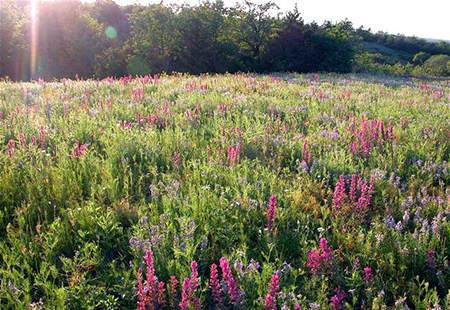
Eryngo Leavenworthii, Leavenworth's Eryngo 
Often overlooked, but beautiful summer wildflower


Where is the Fall Y'all?


We had a pretty mild August but September stayed unseasonably hot, and the first week of October is going to stay in the nineties as well. At least we finished out September with some wide- spread rain.

As soon as we have consistent sweatshirt weather we can start changing out summer flowers to pansies for the winter. If it stays hot they tend to stretch and get aphids. If your summer color still looks good you can enjoy well into November, but it is always good to get pansies in the ground a week or two ahead of our first hard freeze so they have some roots developed.

And when will the first hard freeze occur? It can happen any time from November 20 to February. And if anyone could know that more than a few days in advance, they need to be sitting at a table in Vegas.

Along with milder weather October brings a modest list of gardening chores. Turf still needs to be mowed and leaves mulched up, flowers changed out, fire ants treated with bait products, fall pre-emergents and fertilizer applied, and tired summer perennials tidied up. But outdoor chores are always easier on a pleasant fall day.

Call or email us if you would like a catalog of winter color that will be available this year!


Pansies starting mid-October


Texas Trees for Fall Color

We all know that fall foliage in north Texas is not a big showstopper, but with the right weather conditions here are a few trees that can stand out.

Autumn Blaze Maple
one of the few maples suited for our area


Cedar Elm
a true native


Chinese Pistache
a well rounded, mid-size tree
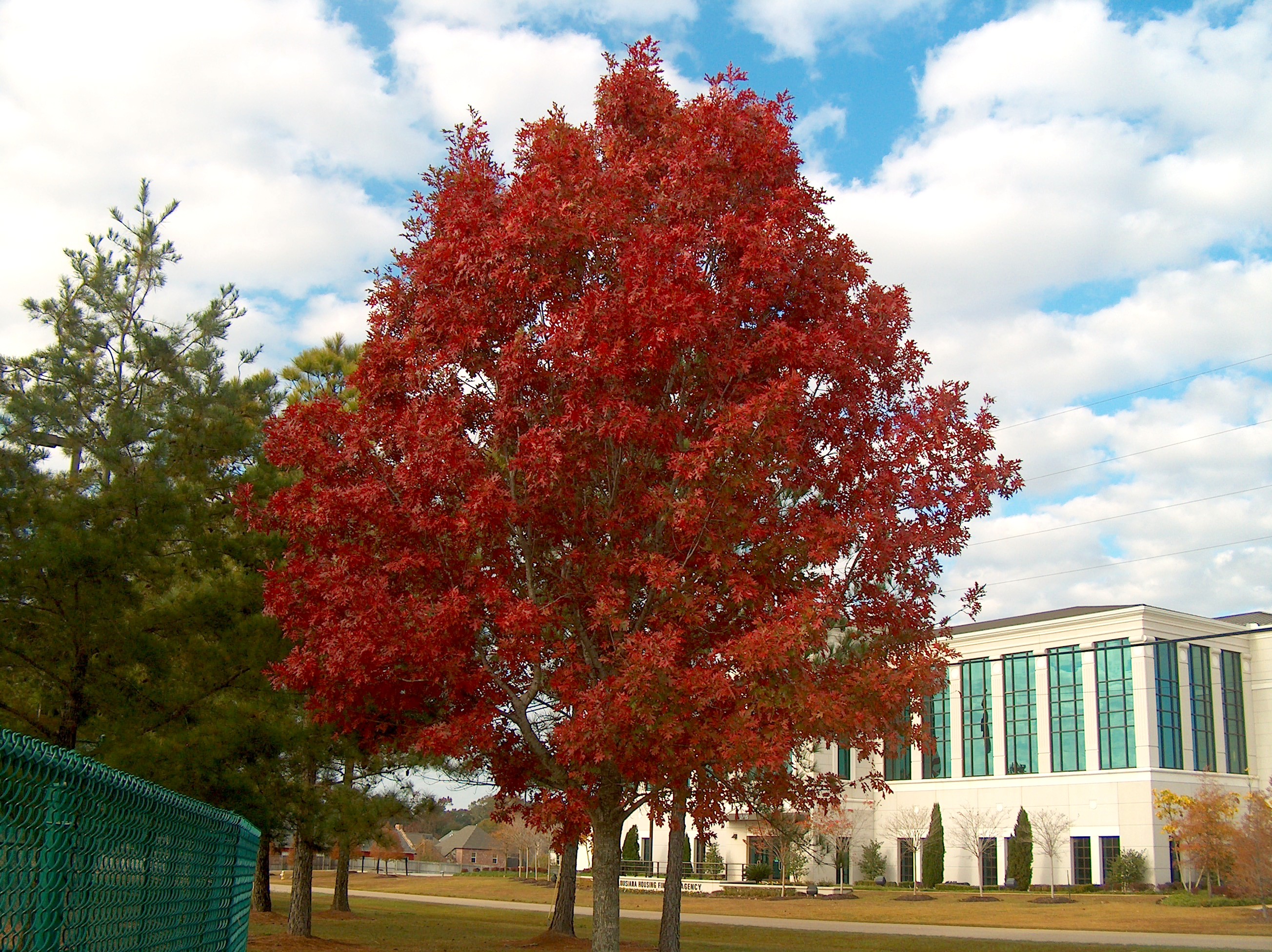

Shumard Red Oak
a native and widely planted tree; not to be confused with northern red oaks or pin oaks, both of which will not grow in our soils


Happy Halloween!


LED Christmas Lighting - Time to Plan Now!


I know, I know, we haven’t even gotten to Halloween yet and retailers are already pushing Christmas. We are not jumping on the marketing bandwagon, but since we are only taking a limited number of new properties for Christmas lighting, we want you to have the info you need to plan your project and get on the schedule. We continue to recommend Seasonal Source LED lighting.

Why Seasonal Source LED?
  • LED is green technology, consuming about 80% less electricity than traditional. You save money every year you use them.
  • Tired of testing your strings of lights every year only to find half of them don’t work anymore? Our lights are premium grade and ruggedly constructed with a 3 year guarantee.
  • Our LED lighting provides a dazzlingly bright display with brilliant jewel-like colors that never fade, chip, or scratch. You can choose from traditional warm-white to an array of festive colors.
  • LED are safe and cool to the touch.
  • Do more with less. Let’s compare the energy savings: On roof lighting, we typically use the C9 bulb. With LED, 100 ft of roof line will use less electricity than a single 100 watt light bulb. 100 ft of traditional incandescent Christmas lights will consume more power than a 600 watt microwave! When wrapping trees or columns with mini-lights, we can plug up to 300 23 foot long strings into one outlet! Compare with only 35 strings of traditional mini lights.

It's easy to see:

You can cover more area with a huge reduction in electrical costs, or increase your display without dangerously overloading your electrical circuits.


What do we provide?

We can provide everything for your outdoor display, custom designed to fit your home, including mini lights to wrap trees and shrubs, C9 roof lights, lighted wreaths and garlands, and all the jumpers, cords, and timer needed to make it all work. After Christmas, we will come out and place the lights in stackable storage boxes with tags and a diagram so that installation the following year will be easy to duplicate.

What does it cost?

We will measure your roof, trees, shrubs, sidewalks—whatever you want to highlight and provide an estimate and design suggestions. Once you have purchased your lights and supplies from us, we have a simple labor rate to cover installation and take down.

Labor
  • Lining driveways, sidewalks, etc.: $2.00 per ft
  • Single story roof lines: $3.00 per ft
  • Second story roofs: $5.00 per ft

Materials
  • C9 roof lights start at $2.75 per ft including wire and clips
  • Storage boxes are $10.00 or you can provide your own
  • Wrapping tree trunks, shrubs, etc.: 23 ft strings of M5 or G12 mini lights run $25.00 per string. If you already have the lights it is $6.00 per string for labor only.

For estimates, contact Mike Johnson.


Another of John's Favorite "Weeds"


You may have noticed tall white “weeds” showing up along our roadsides and pastures during the last few weeks. A closer inspection reveals that they are actually a beautiful euphorbia, Agaloma marginata or Snow on the Mountain. Similar to a poinsettia, the flowers are tiny and somewhat inconspicuous but are surrounded by showy white bracts with green stripes. Natives like these are important sources of nectar for pollinators like our endangered honey bees.


October Chores


  • Mow less often as the lawn slows down

  • Water once—twice a week as needed

  • Treat fire ants—bait products work well in Fall

  • Overseed rye and fescue grass

  • Apply weed pre-emergent and fertilizer

  • Sow wildflower seeds for spring 


Our goal is to fulfill the needs of the customer by providing timely, quality services and products.
Thanks for your business!


Spencer Young
Pool and Water Garden Services

Wednesday, June 7, 2017

Prime's Clippings June 2017

Centaura Americana - American Basket Flower
An early summer wildflower


Ready for Summer?


May was a disappointment to much of the metroplex regarding our rain totals. Normally our wettest month, it seems most of the storms split north and south of Fort Worth. There have been blisteringly hot days and a few blissfully cool days as well, but it is a sure bet that hot weather will start to dominate.

We have already had to start supplemental watering in between the scattered rains, and pay close attention to newly planted flowers, shrubs, and trees  to make sure they are not allowed to dry out. Remember, those root zones remain the same size as the pot they were in for several weeks or even months. Many plants will recover from wilting but it always slows their growth.

So here is my early summer checklist:

  • Weed beds and mulch everything
  • Fertilize lawns and beds
  • Spot spray weeds in the lawn
  • Check sprinklers and adjust heads
  • Hand water new plants
  • Plant the last warm season vegetables—it’s a little late, but cantaloupes and a few others can still go in
  • Start enjoying the tomatoes, peppers, squash and other garden goodies that are already producing (side note: wage war on squash bugs!)
  • Get outdoors and enjoy the last crops of wildflowers
And when it gets too hot, head for the lake or the pool. Welcome summer!


What to watch for as we heat up...


Surprisingly, we haven’t observed too many insect issues yet in spite of our warm winter. Mosquitoes are starting to show up but have not been a big problem. We have been monitoring for bagworms on one of our properties that has hundreds of cypress trees, and they have not shown up yet. We are nearing the time for tent caterpillars as well, so we may start seeing both of these critters pop up in June.

Fire ants of course are ever-present and make new mounds after every rain. And that’s possibly the key to why we haven’t had big problems with any of these pests — we haven’t had a lot of rain just yet.

Aphids and azalea bark scale are a constant problem on crape myrtles, and a systemic insecticide is the most effective weapon against the bark scale.

Conditions were optimal this winter for some blight and canker on Italian cypress and similar trees. There is no control, so if you have dead patches in your cypress or junipers prune it out or remove the tree. Some crapes had severe freeze damage, treatment is the same. Most fungal diseases should decrease as it gets hot, but gray leaf spot and chinch bugs are potential summer problems for St. Augustine.


gray leaf spot


chinch bugs


Prime landscapes new ride at Six Flags!


We were honored to work on a new attraction at Six Flags again this year, helping them usher in The Joker. This is an exciting ride for the true thrill seeker. And it is exciting for us to get to work with the skilled and dedicated team at Six Flags and observe how they meet all the challenges in bringing these world-class attractions to the public.  Be sure and include a trip to Six Flags in your summer plans!


June Chores


  • Mow Weekly
  • Finish planting spring flowers
  • Mulch beds
  • Treat for fire ants, mosquitoes, and caterpillars 

Our goal is to fulfill the needs of the customer by providing timely, quality services and products.
Thanks for your business!


Greg Hamann, Owner


Wednesday, April 5, 2017

Prime's Clippings April 2017


Looking Forward to a Great Spring


I would say that this has not been a normal winter or start to spring time, but since this is north Texas normal weather is hard to define. The two hard freezes we had this winter burnt quite a few plants, and all the 80 and 90 degree days confused plants and insects, as well as some of us humans. I know I’m confused all too often these days.

Several of our spring plants bloomed weeks earlier than normal, including bluebonnets and Bridal wreath. Pansies have held up well this spring in most places, but patches were lost to the 3 days of teens and twenties in early January. Fortunately it’s about time to start changing out to summer color.

We have already had our first storm with damaging winds and hail, and we can expect more over the next two months. At least May is traditionally our wettest month. There is plenty of time to get new plants and sod in and have Mother Nature’s helping hand in getting them established before our hot weather arrives, but I guess that depends on how “normal” our weather is!

April is absolutely the busiest month of the year for gardening, so please be patient with us if we can’t always get right to you. We promise to do our best!


How to Water Newly Planted Shrubs and Trees


A reminder for anyone planting new shrubs and trees.

Although sprinkler systems will supplement rains adequately on lawns and established plants, most new plants need to be thoroughly soaked once a week until they get established, and very few sprinkler systems are capable of soaking an entire root ball.

This means that if you do not receive a good soaking rain every 6-10 days, you need to get the old water hose out and hand water your new plants weekly.

The bigger the plant, the more important this is. Most plants like a well drained soil, so container grown plants are usually planted in an organic mix that drains very well. Plants are usually watered daily at the nursery and sometimes going without water for even a couple days can dry out the root ball to the point of damaging the plant. When your new plants are taken from that container and placed in soil, the same affect can be seen, although not quite as rapidly.

When a healthy plant fails within just a few weeks of installation, 90% of the time it is due to that root ball being allowed to dry out. We’ll chalk up 9% to the other culprit, over watering, and 1% to a damaged root ball.

Regarding sod, it must stay moist every day for the first few weeks until the roots establish. Give it a good soaking every few days or a light sprinkling every day.

Please help us keep your new plants looking good by watering correctly!


Almost Time for Summer Color


The time is now to start making plans for your summer color!

The petunias we recently planted will make a for a big show through May. If you are a petunia person you will need to swap them out for hot weather plants like lantana or periwinkles in early June. But if you just have pansies or nothing at all in your beds then you can start planting summer flowers now so they can get rooted before hot weather.

There are so many choices, but low maintenance plants that are not finicky are a big factor for most of us. Few people have the time or inclination to constantly check and treat for insects or diseases, and we need plants that can outlast a long summer season with extreme temperatures. So with this demanding criteria, here are some proven winners and appropriate applications for them.

Full sun or afternoon sun areas:

Lantana is hands-down the toughest choice for high heat, and the absolute best choice for dryer beds. Some folks think lantana can get a little unruly, but there are new compact dwarf varieties that really perform and grow only to about 12 inches. Pentas are another heat lover with few problems, and for big accents use purple fountain grass, esperanza, and sun coleus. Scaevola is a great trailing plant in lavender or white, and Blackfoot daisy is a fragrant mounding/trailing plant—both great for rock walls, containers or borders.


Periwinkles love the heat but cannot be planted here until about mid-may due to pythium and rhizoctonia root rot when nights are cool or it is too wet. Dwarf zinnias can have similar issues if planted too early. Sweet potato vines are another great accent as long as you have the space for them or the time to periodically cut them back, and artemesias such as Dusty Miller or Powis Castle provide silvery foliage. Sunpatiens are a sun tolerant variety of impatiens and perform well with adequate water, but are usually quite a bit pricier.


Other choices for sun include Angelonia, Torenia, Salvia, Blue Daze, Moss Rose, and Purslane. Bronze begonias tolerate sun or shade so are great for those places that go in and out of the sun, but they struggle with uneven moisture, and with twice a week water restrictions it can be hard to keep them looking good in July-August.


Shade areas:
In the shade, caladiums and begonias are king with impatiens close behind. Impatiens need a little light to look good all summer. In heavy shade they tend to get leggy in July-August. Caladiums also need consistent water and once they start withering they take a long time to recover. You can also use foliage plants like shade coleus, Japanese painted fern, alternanthera, or lamium. We have had great luck with Dragon Wing Begonias in shade despite uneven watering. Like sunpatiens, these are normally a little more costly than some of the more common bedding plants, but grow really large and fill a lot of space..


Reminders


E-mail
Please call or e-mail us to start getting your invoices and statements via e-mail. We will never share your contact information or blast you with solicitations. It is simply the most environmentally friendly and efficient way to do business.

Scheduling
During the spring season, we have many homeowners with different preferences for their mowing schedule. If you are not on a 12 month pro-rated contract, please let us know when you want to start weekly services. Also please give at least 24 hours notice to change a regular service.


April Chores


  • Aerate lawn
  • Mow weekly
  • Plant spring flowers & shrubs
  • Mulch beds
  • Treat fire ants
  • Check/set irrigation system
  • Start trimming hedges
  • Weed control in beds
  • Fertilize lawns and shrubs


Our goal is to fulfill the needs of the customer by providing timely, quality services and products.
Thanks for your business!

Thursday, October 9, 2014

Fall Lawn Treatments- The Most Important Application of the Year

It's not too late to schedule the most important lawn application of the year!

If you are on our regular lawn application program you will be receiving an application of pre-emergent weed control in September-October.

This is the most important lawn application of the year! Winter weeds begin germinating in September and October, and depending on weather conditions may not be noticeable until spring. But if you want the best chance of reducing or eliminating those unsightly weeds you see in March, you must treat the seeds now!

Dandelions, thistles, henbit, chickweed, oxalis, rescue grass, and poa annua are the biggest culprits in our spring gallery of weed problems, and most of these seeds will start sprouting when soil temperatures at the surface drop below 70 degrees. It doesn’t take too many days of cool cloudy weather to achieve this, so timing is critical.

Pre-emergents never provide 100% control, but they will make a big difference. Pre-emergents work by creating a chemical barrier in the soil that kills the seedling as it starts to emerge. This application may be combined with a broadleaf weed post emergent control to kill any that have already sprouted. Heavy rains or wet winters may dilute or move the chemical barrier deeper in the soil sometimes reducing effectiveness.
Don't let those pesky weeds get the drop on you!

Our Fall application also includes fertilizers to get your lawn ready for dormancy. Nitrogen helps thicken the lawn and smother weeds, and potassium builds stronger root systems to help your lawn through hard freezes and promote early green-up in spring.

Call us today if you would like to schedule a fall application for your lawn. (817)461-4000

Friday, November 1, 2013

Fall Water Garden Services

Leaves are dropping regularly and are probably the biggest challenge in maintaining a naturalistic water feature. It is important to empty the skimmers and keep the leaves scooped out regularly. Clogged skimmers cause a myriad of problems, cutting off flow to the pump, and causing fill valves to run excessively since the water level drops in the skimmer.

Since water plants are starting to go dormant, one solution for shaded ponds is to cover the pond with a leaf net using tubing to suspend the net off the water. We can custom fit a leaf net system to virtually any pond.

Call for more details.

Don't let leaves muck up your water feature!


Time to Order Bulbs

If you want a beautiful spring show of annual tulips, daffodils, paper whites, or jonquils, now is the time to order them! Bulb prices start as low as $.75 each installed with a minimum of 100 bulbs.

We will be picking up our bulb orders this month and start planting after Thanksgiving. Call to place your order today!

Not sure what to plant? Email us!

Beautiful tulips in bloom

Pleasant Fall Days and Holidays Ahead

Our fall weather is really just getting started. We may see a freeze by around the end of the month, but we should also see a lot more mild weather in the next 2 months. The rains have been great, and maybe they will continue and get our lakes out of the drought situation.

Fire ants are extremely active this time of year, foraging for food to last through winter. This is the ideal time to apply bait products. You will see new mounds pop up after every rain. Feeed your ants. Feed them!

Gardeners look to the change of seasons as a chance to plant pansies, kale, and other cool season plants that we can’t use during our hot summers.

There are still lots of chores to do — replacing plants, prepping veggie gardens, mulching beds, trimming trees, and raking leaves. And we have splendid weather for doing our outdoor chores. But if you aren’t big on chores, remember that’s what we are here for! So dig this fall weather and leave the real diggin’ to us.

The Autumn Blaze Maple - One of few maples adapted to our area

Fire Ants - Here to Stay, What You Can Do

Fire ants came out with a vengeance after the October rains. This is a typical pattern, where the ants are less active in hot dry summer conditions and begin foraging and spreading aggressively as weather cools and soil moisture rises. Fire ants cannot be eliminated, they can only be managed. Sad, but true. Queens can fly and move their colonies up to 3 miles and may do so several times a year. It is impossible to keep ants from migrating into a property. Colonies may also dig as deep as 10 feet into the ground, and 3-4 foot deep is common. Other than using bait products that workers can carry to the queens hidden deep underground, it is virtually impossible to poison an entire mound.

Call to schedule a treatment today while conditions are still optimal!
This is a great time to apply bait-type controls. The ants will be very active through the remainder of November – December,foraging for winter, and will carry baits to the queens. Baits have a minimal environmental impact and offer long term control, up to 80-90% effectiveness. The Texas Department of Agriculture’s “Texas Two Step” recommends treating individual mounds that are in problem areas with a mound treatment and to broadcast bait products throughout the entire area. The other proven method is to broadcast fipronil across the entire property or around the perimeters of larger properties to create a chemical barrier effective for up to 8 months. Ants die as they tunnel or cross through the barrier. Fipronil can also offer up to 80% effectiveness and a longer residual effect, but is also somewhat more expensive.

Fire ants are not just annoying, they are destructive and dangerous. They can inflict serious and painful injury to young children and adults who may be allergic, and are renown for colonizing outdoor electrical equipment and shorting it out.


Monday, October 14, 2013

LED Christmas Lighting — Time to Plan Now!

The ho-ho-holidays are almost here!

I know, I know, we haven’t even gotten to Halloween yet and retailers are already pushing Christmas. We hate to jump on the bandwagon, but since we are now an official installer of Seasonal Source LED Christmas Lighting, we want you to have the info you need to plan your holiday lighting and get on the schedule.

Why Seasonal Source LED?

 LED is green technology, consuming about 80% less electricity than traditional. You save money every year you use them.

 Tired of testing your strings of lights every year only to find half of them don’t work anymore? Our lights are premium grade and ruggedly constructed with a 3 year guarantee.

 Our LED lighting provides a dazzlingly bright display with brilliant jewel-like colors that never fade, chip, or scratch. You can choose from traditional warm-white to an array of festive colors.

 LED are safe and cool to the touch.

 Do more with less. Let’s compare the energy savings: On roof lighting, we typically use the C9 bulb. With LED, 100 ft of roof line will use less electricity than a single 100 watt light bulb. 100 ft of traditional incandescent Christmas lights will consume more power than a 600 watt microwave! When wrapping trees or columns with mini-lights, we can plug up to 300 23 foot long strings into one outlet! Compare with only 35 strings of traditional mini lights.

Its easy to see. You can cover more area with a huge reduction in electrical costs, or increase your display without dangerously overloading your electrical circuits.

What do we provide?

We can provide everything for your outdoor display, custom designed to fit your home, including mini lights to wrap trees and shrubs, C9 roof lights, lighted wreaths and garlands, and all the jumpers, cords, and timer needed to make it all work. After Christmas, we will come out and place the lights in stackable storage boxes with tags and a diagram so that installation the following year will be easy to duplicate.

What does it cost?

We will measure your roof, trees, shrubs, sidewalks- whatever you want to highlight and provide an estimate and design suggestions. Once you have purchased your lights and supplies from us, we have a simple labor rate to cover installation and take down.

Labor
Lining driveways, sidewalks, etc: $1.25 per ft
Single story roof lines: $2.50 per ft.
Second story roofs: $3.75 per ft
Wrapping tree trunks, shrubs, etc. $.25 per ft

Sample light prices:
C9 roof lights are $1.70 per ft including wire and clips, and 23.5 ft strings of M5 or G12 mini lights run $15.00—$18.00 per string depending on color.

Got Junk? We Can Help

Do you have something unsightly taking up room in your yard or garage?

We can haul off that rotten firewood, broken picnic table, or other trash that is too large or cumbersome to put out on the curb. Just let us know what you need disposed of.

We can get you a quick estimate and help you get that junk out of your trunk!

Prime can take care of that unsightly mountain for you!

Good Times Ahead

Fall officially began September 22nd as the sun reached the autumnal equinox and our day and night were nearly equal in length. And despite the unseasonably hot and dry September we had experienced so far, the fall spirits cooperated with a nice rain and low temperature of 56. Hopefully September was summer’s last blast. Lots of 90 degree days and virtually no rain really dried us out, but October looks to arrive with milder weather just as it should.

With this latest round of showers we will see bluebonnets and other spring wildflowers germinating. Of course, this means that henbit and a few other less desirable “wildflowers” will be popping up in our lawns and beds. Be sure you have us apply a pre-emergent weed control soon if you haven’t already!

Fire ants are extremely active this time of year, foraging for food to last through winter. This the ideal time to apply bait products. You will see new mounds pop up after every rain. Feeed your ants. Feed them!

Several flowering plants will put on a last big show for the season. Some of our most notables are the cool lavender blooms of Mexican Bush Sage and Blue Fall Aster. The bright yellow of Mexican Mint Marigold is a great companion. Salvia greggi are blooming in pinks, reds and many other shades, great forage for migrating humming birds and butterflies. Texas sage puts on a big purple bloom after rains and Knock-out roses are flushing again. All of these plants are also tolerant of dry conditions and water restrictions.

Salvia Leucantha
The next several weeks should provide some of our most pleasant weather and some great flowers. Get out and enjoy this great time of year!

Salvia Greggi

Tuesday, September 10, 2013

Late Summer Lawn Care

Last month we reminded you that grub worms are most vulnerable in August and that is an optimal time to treat. Well, we have seen several infestations, so you may want to consider treating now while the window is still open.

As evenings start to cool in late September and on through November, watch for irregular circular brown spots in St. Augustine during rainy weather. Brown patch is a common fungus that can do severe damage to your lawn going into winter. In fact, since take-all patch also becomes active in fall, you should consider a preventative fungicide application. We have professional products that are labeled for both problems, and it is much better to treat proactively. Once take-all patch has infected the roots, there is virtually no way to save the lawn.

Spurge is a flat broadleaf weed that sprouts in July-August after a good rain. Fast growing and difficult to control, this is the dominant weed problem we are seeing at this time. Your next application will contain a broadleaf spray to help control this if you have any in your lawn.

One reason that late summer weeds like spurge are hard to control is that most herbicides will damage the lawn in hot weather. Celsius or similar sulfonylureas are about the only option for weed control with minimal turf stress.

Reliving the 70s with a little help from his spurge

Tuesday, September 3, 2013

Fall - A Great Season For Gardening

August gets a B+ this year, with our hot streak taking a rain break around the middle of the month and evenings dipping into the seventies. This doesn’t mean that hot weather is gone for good, but it appears that things are easing and we can get back to enjoying our yards and start our fall gardening projects.

I get as excited about this time of year as I do spring, and it always seems to fly by just as quickly.

Get those fall veggies planted, prune out the sun burnt stuff, and get the fall pre-emergent and fertilizers put out. Plant trees, shrubs, groundcovers, and new lawns, but—we have to control ourselves and hold off on pansies until no earlier than October.

You should have plenty to do as the days get shorter, and soon enough you’ll be able to enjoy a cool evening around your outdoor fire pit.


Wait—you don’t have one of those yet? Hmmm, maybe you better give us a call!