Showing posts with label planting. Show all posts

Wednesday, January 2, 2019

Prime's Clippings January 2019


Daffodils- Coming Soon!


Happy New Year!


As we put a tumultuous 2018 in our rear-view mirrors, here’s hoping the New Year will bring a fresh start and renewed optimism for a great year.  We appreciate each and every one of our clients and the opportunities you gave us in 2018 and look forward to another great year serving you.

The hard freeze we got on the morning of Jan. 1st can be a good thing for reducing bug populations, but overall we have had abnormal rainfall and mild temperatures. Unfortunately this sets us up for a bad winter weed situation with big patches of henbit and winter weeds already growing rampantly along the roadsides (and in our flower beds!) The agenda for January will be finishing leaf clean ups, weeding beds, and starting broadleaf weed applications.

Fire ants have been more noticeable too because the saturated soils make them mound at the surface. That will be another spring challenge to look forward to.

The bright side? You don’t have to water pansies when we get weekly rains, the wildflower show this spring should be a good one, and area lakes are full. Already lots of things to look forward to in 2019!


Winter Chores


Leaves: Most of our leaves are down and we should finish the last of our leaf clean ups in early January. Some trees like Shumard oak are still holding their leaves but should finish dropping any day now. Live oaks drop in Feb - March, giving us another round of leaf clean-ups in late winter. If we haven’t gotten to yours and at any time this winter you need a clean up please call to let us know.

Remember too that we clean gutters! Let us know if we can help you with that!

Weeds: Our first round of Spring pre-emergent weed control will start in January-February. This application and the next one in March also contain a broadleaf weed killer for any dandelions, henbit, or chickweed that have come up over the last few months. Even when they are caught early it still takes two applications to kill them. Please note that grassy winter weeds like wild rye and rescue grass are very difficult to control. They require spot treatments with specialty herbicides which take several weeks to work.

Pruning: Most perennials are dormant now and need to be cut back. Ornamental fountain grasses like Maiden and Muhly grasses look nice for awhile after dormancy but will start to shed and get messy. We will start cutting those back in January as well. Roses should be cut back in February. Winter is also the time to make drastic cuts if you are trying to reduce the size of overgrown shrubs.

Some specifics on pruning: Many perennials die back almost to the ground and should be cut very low. You can usually tell—rudbeckias, salvia leucantha, etc. Woody perennials like the popular salvia greggi benefit from a hard pruning of a third or more. Hydrangeas are deciduous, not perennials. Those stems may look brown but do not prune them unless you just want to make them smaller. Doing so will remove next year’s flowers.

Groundcovers: Our liriope and Asian jasmine groundcovers should be cut back before they start to put out new growth in spring. With our unpredictable winters it is hard to pick the best time. We normally wait until the end of January to avoid exposing them to temperatures in the teens.

Transplanting: January and February are good months for transplanting shrubs and dividing most perennials. However, it is not always practical to transplant large shrubs or trees for several reasons: There are often sprinkler pipes or other plants in close proximity, making it difficult to excavate an appropriate root ball. There is always a higher mortality with transplants than with container plants, and the labor for transplanting may equal or exceed the cost to install a new plant. So in most cases, transplanting trees or shrubs is only practical as a do it yourself chore.

Tree Trimming: Limb structure is easiest to see when trees are dormant, so winter is a good time to clean up your trees. Remember in Arlington that tree limbs by city code must be kept 14 ft above the street. This is a good idea regardless of where you live, so your limbs are not damaged by delivery trucks and they do not impede emergency vehicles like fire trucks. The rains this fall will add a lot of growth come spring so plan on having to remove some low limbs this year.

Planting: Fall and winter are great seasons for planting new shrubs and trees to avoid moisture stress and get the root systems established before summer! Exceptions would be palms or tender zone 8 plants.

Planning: And if you are a spring gardener, start lining up your improvement plans now! We routinely book out for several weeks starting in March. And if you are a fellow veggie gardener, winter is when we peruse seed catalogs for inspiration and new varieties to try. In fact, it is time to plant onions now and only a month away from planting cabbage and broccoli seedlings!


Drainage Solutions


The past few months have brought numerous flooding events throughout Texas. Many homes and properties that have less than optimal slope can benefit from drainage modifications.

The first goal is to create a slope that carries water away from structures or problem areas on the surface. It may involve regrading, retaining walls, or swales.

Next is to capture concentrated water from roofs or concrete areas and redirect it, usually using drain pipes.

You may also need catch basins connected to pipes in strategic areas to capture more surface water, and lastly a French drain system of perforated pipe in gravel can be used to dry out low areas that tend to stay wet.

And if your problem area is lower than the surrounding areas, a sump pump system may be incorporated to move the water.

Each situation is unique and may require one or more of these solutions. If you are dealing with drainage problems, give us a call for a free evaluation and estimate.


A Word About Crape Myrtle Pruning


Crape myrtles are traditionally pruned in January-February.

The horticulturally correct method is to treat a standard tree-form crape like any other tree. Prune entire branches to allow more sunlight into the canopy and reduce overcrowding, remove low branches that are in the way, remove water sprouts and suckers, and strip the seed pods if their appearance bothers you or cut tips of limbs no larger than a pencil.

However, many properties and some homeowners want their crapes kept within a certain size range and this limit requires “topping” or more drastic cutting of the crowns. Since we have to administer both techniques, be sure to let us know if you have a preference.


January Chores


  • Finish leaf clean-ups
  • Mulch beds
  • Trim crape myrtles
  • Make major pruning changes to overgrown shrubs
  • Prune low limbs on trees
  • Prune dormant perennials and fountain grasses
  • Plant and transplant trees and shrubs
  • Apply pre-emergent and broadleaf herbicides
  • Change water and clean water gardens and koi ponds

Our goal is to fulfill the needs of the customer by providing timely, quality services and products.
Thanks for your business!

Wednesday, August 1, 2018

Prime's Clippings August 2018

How 'bout a cactus flower to "celebrate" this awful summer

How 'bout a cactus flower to "celebrate" this awful summer

The Drought Continues


Most of the metroplex had a decent shower July 30th, but it was just the proverbial drop in a bucket. And how many other places celebrate a week when the highs won’t get above 99? Well, we will take whatever blessings we can get this year.

We started this summer without our usual rainy May, and high temperatures set in early. We broke several record highs in July, including some record high lows—meaning our plants didn’t get much of a break even at night.

This is one of those summers that has been hard on new plants and those that prefer moist conditions. And it is difficult at best to deeply soak new plants using just your sprinkler system. Getting a water hose out to apply some TLC regularly has been the only way to get most new plantings through their first summer this year.

Griping about this drought brings up another point to consider: Our best planting season is just a month or two away. I know it is hard for the typical gardener to get spring fever in the fall, but once our hot dry weather breaks we will have several months of ideal planting conditions for most shrubs, trees, and ornamentals. We normally have cooler temperatures and regular rainfall starting in October and lasting through the winter. Although the plant above ground may not show signs of growth, the roots will be growing and establishing, giving the plant a better chance for surviving next year’s dry spell.

So enjoy the pool or the lake and keep your hose handy for another month. Then plan ahead for your fall plantings!


114 degrees- not what you want to see at the end of a long day...


Time To Treat For Grub Worms

August is the time of year to treat for grub worms. Most of our grub damage is brought on by the larva of the June beetle. Peak flights of the June beetle occur in mid May to mid June and eggs hatch about 1 month later. Grubs are easiest to kill at this early stage of their growth due to the fact that they are closer to the soil surface.

Not every yard will have a large enough population to cause damage, but if you have had one in the past you may be in a location that is prone to infestation. Lawns close to street lights where June bugs gather are often hit, and ironically they often attack well watered lush lawn when soil is soft and food (roots) are abundant. They can do serious damage to turf over the next two months.


Treatments for most residential lawns start at just $48.00

(up to 5000 sq. ft., prices based on sq. footage of turf, call or email us for more information) 

This many grubs in 1 square foot of soil is enough to do serious damage...


How Sprinkler Heads Get Hit By Mowers


“Your guys hit my sprinkler head with the mower”! Believe me, neither one of us wants to hear that. Our crews mow over 300 acres of lawn each week, passing over thousands of sprinkler heads without a problem. And there is the key- sprinklers are designed and installed as underground systems. A properly installed head should be at or just above grade, and a properly functioning head will retract back into the ground after it waters. In both cases, a lawn mower cannot damage a head that is working properly.

Over time, several factors affect sprinkler head performance and may render the head subject to accidental breakage. The seal around the riser hardens with time and springs wear out preventing retraction.

Soils settle and move, sometimes leaving the head sitting too high. Heads also sink or have dirt build up around them, leaving the head below grade. This is very common and allows dirt to seep into the head around the seal. This grit causes the nozzle to stick in the up position or not retract fully, leaving the nozzle just high enough to be clipped by a mower, but not high enough to be seen.

Tree roots may develop under a head and as they grow they may push the head up, and eventually it will be high enough to snag a mower deck.

Heads along the sidewalk, curb, or driveway are supposed to be 2-4 inches away from the concrete. Over time they may shift or settle at an angle and touch the concrete leaving no room for the lawn edger blade to pass by.

All of these issues are just routine maintenance and service work that must be performed when the problem occurs, and are not the fault of the equipment operator. Very rarely can you see the head in the tall grass before you hit it with a mower or edger. We will always charge a discounted rate to repair a head that is hit by one of our mowing crews, but please remember that it is not the fault of the mowing service when a sprinkler head is struck.


August Chores


  • Mow weekly and do not bag clippings
  • Hand water newly planted areas & trees
  • Watch for dry spots and chinch bugs in turf
  • Check and adjust sprinkler systems
  • Mulch beds 
  • Treat for grub worms


Toby, star of this year's HOT new reality show, "The Dog Days of Summer"

Toby, star of this year's HOT new reality show, "The Dog Days of Summer"


Our goal is to fulfill the needs of the customer by providing timely, quality services and products.

Thanks for your business!

Tuesday, May 8, 2018

Prime's Clippings May 2018


Oenothera speciosa Evening Primrose
One of our beautiful local wildflowers

Not many shower, but plenty of May flowers


Blue Eyed Grass
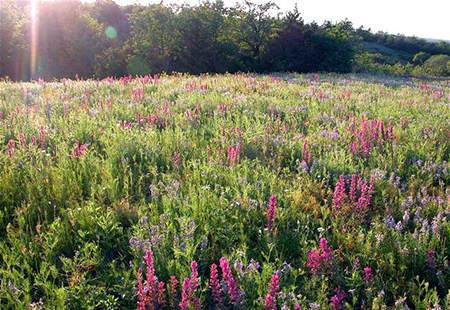
Despite a few heavy rains, April was below average for rainfall across most of the Metroplex, but our roadside wildflowers have still put on a pretty good show. It seems every year a different plant may dominate. This year I noticed some incredible displays of Blue eyed grass and Texas blue star.Blue bonnets and paintbrushes will transition to Indian blankets, verbena, bee balm, and other warm weather flowers in our fields and roadsides. May is a great time for road trips to take in our beautiful wildflower shows.Texas BluestarMay is historically our rainiest month, but can also be our stormiest with hail and tornados. Lets hope for more rain and less storms. Leave sprinklers off until rains disappear for a week or more, but keep an eye on any new plants. We will be jumping 90 degree afternoons soon, and we have been in a windy pattern that can wilt newly planted flowers in just a day or so.Cool nights and frequent rains can bring on fungal problems like leaf spot on hawthorns and photinias but we should celebrate rain and all the cool weather we can get before summer sets in.


May is the month for yard work


May may be the busiest month for yard work. As the weather warms and rain normally abounds, lawns finally kick into high gear. Along with weeds, new growth on shrubs and trees, insects, pollen in the air, lions and tigers and bears—Oh My! It can be hard to keep up.


Here is a list of some of the chores to get to in the next 30 days:
  • Fertilize lawns now and treat any remaining broadleaf weeds.
  • Mow weekly. Letting grass get too tall between cuttings is hard on the grass and your equipment. 
  • Fertilize spring flowering shrubs after they finish blooming. Watch for fungal leaf spot and treat as needed.
  • Trim shrubs, each according to it’s needs.
  • Remove rosette infected rose bushes.
  • Apply baits or season-long controls like Top Choice for fire ants.
  • Trim limbs that have suddenly become too low due to the heavy flush of new growth.
  • Plant summer flowers like pentas, zinnias, etc. It is a little early for periwinkles but we are planting if requested. Cool wet weather can cause fungal problems.


Poison Ivy and Other Spring Surprises


Poison ivy is abundant in our area, and most folks already know if they are allergic to it. Yes, that is correct. Not everyone reacts to exposure. I personally can rub it on my face with no ill effects, but some folks have to get cortisone shots or may even get a serious skin infection from scratching when they are covered with pustules. If you are not sure of your sensitivity, the best thing to do is avoid it.
Poison ivy is a woody vine that may climb trees, fences, or any vertical structure. A mature vine may be several inches thick and can be confused for a small tree. The easiest identifier is the 3 leaves with lobed margins.

Poison ivy produces white berries in late season and may turn a vivid red in the fall.
Blackberry vines are also similar, but of course have thorns. Pretty well unmistakable. Blackberries may also have 4 and 5 leaves.

There are several copycats that are harmless and easy to differentiate with just a little practice.

Virginia CreeperThe first and most often mistaken is Virginia creeper. Grows in the same places and with the same habit with one BIG exception—5 leaves!

Boxelder TreeA real trickster is the boxelder tree. Young boxelder seedlings look just like poison ivy except for the green stem and fact that they will grow into trees.

Cow itch vine is another to avoid. Just like poison ivy it may cause severe itching but does not affect everyone. It is actually in the grape family whereas poison ivy is in the Sumac family. Cow Itch VineNotice the three leaves? Much more deeply lobed, but still 3 leaves. This vine has an unpleasant odor when crushed, one more sign telling you to steer clear.

Bull nettle may be found in numerous places and you may encounter on a hike or nature walk, but occasionally a bird might plant a seed in your garden. This is a vicious plant which creates a burning inflammation. Like a thistle, you can pretty well determine by appearance that it is not to be messed with. Interestingly though, it produces a tasty nut if you are brave enough to harvest it.  My dad used to take me in the woods with thick leather gloves to pick and clean the nuts. I haven’t eaten one in a long time. There are certainly easier nuts to pick!

Now for plants that are commonly planted in the home garden. There is no reason to fear toxic plants, but it is always good to have some knowledge of them. It is rare for a dog or child to consume a poisonous plant but it can happen.

Carolina jessamine is a beautiful yellow spring blooming vine, but all parts are poisonous and some folks even have a skin reaction to the sap if they get it on them when trimming.

Common shrubs that are poisonous include hydrangeas, with their huge blooms, oleanders, yews, and even our azaleas.

Narcissus, daffodil, and hyacinth are all poisonous. Ironically, tulip bulbs are not poisonous and have been eaten during hard times by many different peoples.

You should not eat elephant ears or caladiums either, but then surely you have better things to do.

Knowledge is power. So before you start thinking about yanking plants you have had for years because you just found out they are poisonous, remember that even the mighty oak and it’s acorns are toxic. Now you can process acorns to make them edible, but again, surely you have better things to do!


May Chores


  • Mow weekly
  • Finish planting spring flowers
  • Mulch beds
  • Treat for fireants

Our goal is to fulfill the needs of the customer by providing timely, quality services and products.
Thanks for your business!


Wednesday, May 2, 2018

Prime's Clippings April 2018

Enjoying a Great Spring 

April began with a beautiful spring morning followed by a cold front that dropped us into the low 40s Monday morning. For folks like me that planted tomatoes and peppers this weekend I hope you remembered to cover them!

The heavy rains have got us off to a good start on watering in new plants but that also means the weeds are happy. Remember that most of the weeds you see now will burn out as it warms up, and broadleaf weed killers will control a lot of our problems. But most weed controls do not work overnight as advertisers like to claim. Weed management depends on many factors—temperature, growth stage of plant, etc, and is an on-going process.

Trees are budding and some are making messes dropping their leaves (live oaks), seeds or tassels, spring flowering shrubs are in bloom, and bugs of every denomination are starting to bug everyone. No complaints here though, this is a magical time of year in north Texas.

April is absolutely the busiest month of the year for gardening, so please be patient with us if we can’t always get right to you. We promise to do our best!


Shades of Purple 

You can’t help but notice some of the beautiful lavenders and blues that make their appearance in the spring. Here are a few of my favorites.

Texas Mountain Laurel Sophora secundiflora 


Native to the hill country, this small tree will grow here if planted with good drainage and a little northern protection. The blooms are sweetly fragrant.


Purple oxalis Oxalis triangularis 


This purple shamrock is a wonderful border for shade gardens.

Chinese wisteria 


If you have the right space and time for an aggressive vine, the reward is a beautiful show in spring.

Iris


So many varieties, so little time to identify each one that a friend has given you. Better to just enjoy. 


Time for Summer Color 

Start making plans now for your summer color. The petunias we recently planted will make a for a big show through May. If you are a petunia person you will need to swap them out for hot weather plants like lantana or periwinkles in early June. But if you just have pansies or nothing at all in your beds then you can start planting many summer flowers now.

So many choices, but low maintenance plants that are not finicky are a big factor for most of us. Few people have the time or inclination to constantly check and treat for insects or diseases, and we need plants that can outlast a long summer season with extreme temperatures. So with this demanding criteria, here are some proven winners.

Full sun or afternoon sun areas: 

Lantana is hands-down the toughest choice for high heat, and the absolute best choice for dryer beds. Some folks think lantana can get a little unruly, but there are new compact dwarf varieties that really perform and grow only to about 12 inches.

For big accents use purple fountain grass, esperanza, sun coleus, or tropical hibiscus.

Scaevola is a great trailing plant in lavender or white, and Blackfoot daisy is a fragrant mounding/trailing plant—both great for rock walls, containers or borders.

Pentas are another heat lover with few problems

Periwinkles love the heat but cannot be planted here until about mid-may due to pythium and rhizoctonia root rot when nights are cool or it is too wet. Dwarf zinnias can have similar issues if planted too early.

Sweet potato vines are another great accent as long as you have the space for them or the time to periodically cut them back, and artemesias such as Dusty Miller or Powis Castle provide silvery foliage. Sunpatiens are a sun tolerant variety of impatiens and perform well with adequate water, but are usually quite a bit pricier.

Other choices for sun include Angelonia, Torenia, Salvia—both perennial and annual types, Blue Daze, Moss Rose, and Purslane. Bronze begonias tolerate sun or shade so are great for those places that go in and out of the sun, but they struggle with uneven moisture, and with twice a week water restrictions it can be hard to keep them looking good in July-August.


Shade areas: 

In the shade, caladiums and begonias are king with impatiens close behind.

Impatiens need a little light to look good all summer. In heavy shade they tend to get leggy in July-August.

Caladiums also need consistent water. You can also use foliage plants like shade coleus, Japanese painted fern, alternanthera, or lamium.

And Dragon wing begonias rule!

Monday, August 28, 2017

Prime's Clippings September 2017

Lonestar Gumweed, grindelia adenodonta
Just a weed to most, beautiful when you take the time to look

 We will be closed Monday, September 4th 

 for Labor Day 


How Many Days 'til Fall?


August began nicely and was overall a fairly mild month. We certainly had our share of blistering humid days, but the scattered rains throughout north Texas have made this a very bearable summer. Up north, fall dependably begins in September when the kids head back to school. Around here, be prepared for another month or more of hot weather. Maybe we will get lucky though.

Regardless of the difficulty in predicting the onset of cooler weather, September and October are two very important months for north Texas gardeners.

Probably the most important chore coming up is the application of fall pre-emergent weed preventative to our lawns and beds. Equally important is a fall fertilization with a balanced product including potassium for the roots. Some gardening experts will tell you there is a perfect range of days in which to apply pre-emergent, but in truth that range can be quite extensive, and even applications outside of the peak period can be quite effective. But if you are a do-it-yourselfer, this is the single most important application you can make. Don’t forget to do it!

Some other nice things about this time of year are fall veggie gardens and planting new shrubs, trees, and grass. We are on the tail end of planting fall vegetables, but you can still have some success with crops from seed like lettuce, spinach, kale, peas, radishes, and carrots, and even broccoli, cabbage, brussel sprouts, cauliflower and tomatoes if you can find them potted in the nursery.

Milder weather will start to set in, so get ready to enjoy a great time of year.


Late Summer Lawn and Garden Care

The time to treat for grub worms is passing, but treatments will still be effective if done in the next few weeks. Grubs do some of their worst damage in the fall but as soils cool they stop feeding and move deeper into the soil, becoming harder to control.

We are still several weeks from lawns starting into dormancy so continue to mow weekly and water regularly. See the tips above regarding fall pre-emergent and fertilizing. You may make applications at any time now and into October.

Roses, if you are lucky enough to have some that have not fallen victim to rosette disease, benefit from a light pruning in late August or early September. We often have a great rose bloom in October.

Avoid trimming spring blooming plants like azaleas and spiraeas any more this year as you may be removing spring blooms. Also avoid high nitrogen fertilizers on spring bloomers, but you can still use balanced fertilizers and especially iron or acidifiers for chlorotic plants.

If we get into a wet spell, watch for lawn diseases like brown patch (later) or gray leaf spot (now), and powdery mildew, fungal leaf spot, and scale insects on shrubs. Treat as needed depending on severity so your lawn and plants go into winter healthy and happy.


Time for Rye and Fescue Seeding

Time for our annual reminder about over-seeding your lawn with ryegrass. A lush green winter lawn creates a nice foreground or background for early spring flowers like azaleas and spiraeas, and sets your home or business apart from the crowd. Over-seeded lawns normally have fewer winter weed issues as weed seeds have a difficult time germinating in the thick green cover provided by healthy turf. Typical winter weather usually brings enough rainfall to keep your rye green with little or no watering once established.

There are two types of rye seed available, annual and perennial. Annual rye seed is the one most commonly used but will need to be mowed every week in the spring. Perennial rye is more refined, with a darker green color and slower rate of growth, is more difficult to germinate. In our area the term perennial is not accurate. Most rye burns out by June. In shady areas or if we have prolonged cool, wet weather into the summer, ryegrass may persist longer.


The normal preparation for over seeding is to mow the lawn a few notches lower and remove the clippings during the last half of September through October. This allows the seed to make better contact with the ground and improves germination. Depending on rainfall, the seed should be watered several times a week until it is up and growing. In about two weeks, lightly touch up any thin areas. Once it is up, mowing will vary depending on the weather and type of seed used, but once every 2-3 weeks is usually the norm until about March. Light fertilizing in December will enhance the appearance.

Pricing: Scalping, over-seeding, and touch up is based on square footage and will run 8 times the cost of a normal mow. If your mowing is $35, your annual rye installation will be $280. Perennial rye would be $52.50 additional.

For larger or commercial properties call or email to request a quote.

Fescue is a northern grass that struggles here in July and August, but there are transitional mixes now that are an option for heavily shaded yards where St Augustine just will not make it. If you have heavy shade and really prefer a lawn there instead of groundcovers or a shade garden, then fescue may be a fit for you. Like rye, it will germinate now and establish during the winter and spring months. As mentioned, it thins out in our hottest months and does need regular watering, but simply reseed each fall to thicken it back up. Fescue does not usually need to be mowed as often as rye.

We have found an excellent way to install fescue is to aerate the area with a core aeration machine and then broadcast the seed. This is especially effective on slopes where seed may wash.

We only recommend fescue for shaded areas where you are having trouble growing St. Augustine. The pricing is based on square footage with a minimum of $250.


Plants to Consider


Sunshine ligustrum: If you like yellow, this is a neat little shrub. It is evergreen, takes pruning and shaping well and doesn’t seem to have many insect or disease issues. It contrasts well with dark green bushes, purple foliage plants, and purple or red flowers. Use in full or part day sun and with moderate watering.


Garden phlox: Speaking of a purple bloom that would look great behind the sunshine Ligustrum, this variety of old timey garden phlox from my yard attracts butterflies all summer. Available in many colors, phlox paniculata grows about 4-5 ft tall and does best in part sun. A dependable perennial, cut to ground in winter.


Cassia alata, or Candlestick tree, has been around forever but is rarely seen around here. It dies to the ground each winter but often returns from the root, or can be planted from seed or a 1 gallon pot if you can find it in a nursery. Mine grow to about 9 ft tall every summer.


Black Diamond crape myrtle: An interesting newer series of crapes with striking foliage. Available in many colors. Plant in full sun, will reach about 12 ft.


-Prime Landscape Services-
Voted Reader’s Choice Best Landscape Company in Mansfield August 2017
Thanks, Mansfield!


September Chores


  • Mow weekly and do not bag clippings

  • Treat fire ants

  • Overseed rye grass

  • Apply weed pre-emergent and fall fertilizer

  • Sow wildflower seeds for spring


Our goal is to fulfill the needs of the customer by providing timely, quality services and products.
Thanks for your business!


Greg Hamann
Owner

Tuesday, August 1, 2017

Prime's Clippings August 2017

 Prickly Poppy, Argemone Albiflora

an August wildflower and excellent forage plant for quail and bees

Dog Days of Summer


After a fairly pleasant June, July came on hot and dry as expected. Rains have been widely scattered so consider yourself lucky if you had any in your part of the world. As I write this on the last day of July we are expecting a very nice start to August with increased rain chances and high temperatures in the low nineties—sweet!  But for the next two months plants and lawns can go south in a hurry. Keep an eye on tender plants like hydrangeas or newly planted trees and shrubs, and check your sprinklers regularly for clogged nozzles, low heads, heads blocked by shrubs, etc. It only takes a week or so to do serious damage to lawns and landscapes that are not receiving enough water, so stay alert!

So why do we refer to the sultriest days of summer as the “dog days?" Is it because the heat makes dogs short-tempered and mean, or lazy and lethargic? Because we eat a lot of hot dogs?

The original meaning actually had nothing to do with heat or dogs, but hot weather is what we in the northern hemisphere now associate with the phrase. The ancient Greeks marked this time of the year by the rising of Sirius the dog star just before dawn, and associated it with a potential for war or disaster. It also happened to coincide with a really hot time of year, but depending on where you are in the world Sirius will rise at different times. And because the stars in our night sky move independently of Earth’s calendar, in about 13,000 years we will be experiencing the dog days of winter. And I bet the dogs will still be lethargic and lazy, laying about by a warm fire.


Time to Treat for Grubworms!


Don’t forget! August is the time of year to treat for grub worms. Most of our grub damage is brought on by the larva of the June beetle. Peak flights of the June beetle occur in mid May to mid June and eggs hatch about 1 month later. Grubs are easiest to kill at this early stage of their growth due to the fact that they are closer to the soil surface and very small. Not every yard will have a large enough population to cause damage, but if you have had one in the past you may be in a location that is prone to infestation. Lawns close to street lights where June bugs gather are often hit, and ironically they often attack lush lawns when soil is soft and food (roots) is abundant. They can do serious damage to turf over the next two months. And the application we make for grubs may also act as a preventative for chinch bugs, another bad lawn pest.

Prices start at just $49.95 for customers that are already on our 7 step program!

This many grubs in 1 sq ft of soil is enough to do serious damage.


Summer Surprises


While enjoying a late afternoon walk a few years ago we were fortunate enough to be caught in a heavy downpour. Like a couple of kids, we came home soaking wet, chilled, and thrilled to have a good rain in mid summer. Then, just a few days later, we discovered a vast swath of beautiful white flowers held on single stems 8 inches tall, growing in an old mowed field that was once the site of the Pike Drive-In Theater in the fifties. Having driven past this corner my entire life, funny how I never really noticed them until I took the time to actually walk through the field. Sometimes you just have to slow down to find the treasure that was there all along.


These summer jewels are rain lilies. Even though these flowers are called lilies, they actually belong to the Amaryllis family. Rain lily is a generic term that applies to numerous species of plants in three different genus: Zephyranthes, Habranthus, and Cooperia. We dug several clumps to set in our beds and after a few days they went to seed. A second rain brought another flush of flowers a week later. These resilient little bulbs will flush after nearly every summer rain and last virtually forever. Our new wild additions joined some pink ones we purchased at a nursery years ago.


Another plant that will help ease the dog days of summer is the Surprise Lily, Lycoris radiata or Lycoris sqaumigera.

Around the end of August, when you have just about given up on keeping your plants pretty, up jumps a little shoot of fresh green growth. In just about a week it is 2-3 ft. tall and a gorgeous spidery red or pink bloom appears.

Excellent in a mondo grass bed or all by themselves, a few clusters of this beauty will transition you pleasantly into Fall.


Planning for Fall Projects


Every year we like to remind customers that Fall is an excellent time for landscape improvements. Everyone gets spring fever and enjoys freshening up their yard in spring, but well informed gardeners know that Fall is really the best season for planting most of our landscape ornamentals.

Trees, shrubs, and perennials that are planted in September through December get to take advantage of our traditionally mild temperatures and regular rains. Plants that go in the ground in the Fall have reduced heat stress and are better equipped to handle the inevitable dry conditions of next summer.

Although most plants will show little or no top growth during the winter, it’s what is going on in the ground that counts. Root systems thrive in our mild Fall weather and grow vigorously all winter, giving you bigger, healthier plants next year.

Use these hot days of August to make plans for your fall landscape projects.


The Big Email Push


Experts agree, e-mail is the only way to go!

Once again, we are reminding everyone to sign up to “Go Green” and start receiveing your invoices and newsletter via e-mail. We do not share your address with anyone, and we do not send out e-mail blasts soliciting your business.

You can also pay with your favorite credit card if you prefer.

Just call us at 817-461-4000 to set it up.

Better yet, send an e-mail to: contactus@primelandscapeservices.com

Thanks!

Wednesday, April 5, 2017

Prime's Clippings April 2017


Looking Forward to a Great Spring


I would say that this has not been a normal winter or start to spring time, but since this is north Texas normal weather is hard to define. The two hard freezes we had this winter burnt quite a few plants, and all the 80 and 90 degree days confused plants and insects, as well as some of us humans. I know I’m confused all too often these days.

Several of our spring plants bloomed weeks earlier than normal, including bluebonnets and Bridal wreath. Pansies have held up well this spring in most places, but patches were lost to the 3 days of teens and twenties in early January. Fortunately it’s about time to start changing out to summer color.

We have already had our first storm with damaging winds and hail, and we can expect more over the next two months. At least May is traditionally our wettest month. There is plenty of time to get new plants and sod in and have Mother Nature’s helping hand in getting them established before our hot weather arrives, but I guess that depends on how “normal” our weather is!

April is absolutely the busiest month of the year for gardening, so please be patient with us if we can’t always get right to you. We promise to do our best!


How to Water Newly Planted Shrubs and Trees


A reminder for anyone planting new shrubs and trees.

Although sprinkler systems will supplement rains adequately on lawns and established plants, most new plants need to be thoroughly soaked once a week until they get established, and very few sprinkler systems are capable of soaking an entire root ball.

This means that if you do not receive a good soaking rain every 6-10 days, you need to get the old water hose out and hand water your new plants weekly.

The bigger the plant, the more important this is. Most plants like a well drained soil, so container grown plants are usually planted in an organic mix that drains very well. Plants are usually watered daily at the nursery and sometimes going without water for even a couple days can dry out the root ball to the point of damaging the plant. When your new plants are taken from that container and placed in soil, the same affect can be seen, although not quite as rapidly.

When a healthy plant fails within just a few weeks of installation, 90% of the time it is due to that root ball being allowed to dry out. We’ll chalk up 9% to the other culprit, over watering, and 1% to a damaged root ball.

Regarding sod, it must stay moist every day for the first few weeks until the roots establish. Give it a good soaking every few days or a light sprinkling every day.

Please help us keep your new plants looking good by watering correctly!


Almost Time for Summer Color


The time is now to start making plans for your summer color!

The petunias we recently planted will make a for a big show through May. If you are a petunia person you will need to swap them out for hot weather plants like lantana or periwinkles in early June. But if you just have pansies or nothing at all in your beds then you can start planting summer flowers now so they can get rooted before hot weather.

There are so many choices, but low maintenance plants that are not finicky are a big factor for most of us. Few people have the time or inclination to constantly check and treat for insects or diseases, and we need plants that can outlast a long summer season with extreme temperatures. So with this demanding criteria, here are some proven winners and appropriate applications for them.

Full sun or afternoon sun areas:

Lantana is hands-down the toughest choice for high heat, and the absolute best choice for dryer beds. Some folks think lantana can get a little unruly, but there are new compact dwarf varieties that really perform and grow only to about 12 inches. Pentas are another heat lover with few problems, and for big accents use purple fountain grass, esperanza, and sun coleus. Scaevola is a great trailing plant in lavender or white, and Blackfoot daisy is a fragrant mounding/trailing plant—both great for rock walls, containers or borders.


Periwinkles love the heat but cannot be planted here until about mid-may due to pythium and rhizoctonia root rot when nights are cool or it is too wet. Dwarf zinnias can have similar issues if planted too early. Sweet potato vines are another great accent as long as you have the space for them or the time to periodically cut them back, and artemesias such as Dusty Miller or Powis Castle provide silvery foliage. Sunpatiens are a sun tolerant variety of impatiens and perform well with adequate water, but are usually quite a bit pricier.


Other choices for sun include Angelonia, Torenia, Salvia, Blue Daze, Moss Rose, and Purslane. Bronze begonias tolerate sun or shade so are great for those places that go in and out of the sun, but they struggle with uneven moisture, and with twice a week water restrictions it can be hard to keep them looking good in July-August.


Shade areas:
In the shade, caladiums and begonias are king with impatiens close behind. Impatiens need a little light to look good all summer. In heavy shade they tend to get leggy in July-August. Caladiums also need consistent water and once they start withering they take a long time to recover. You can also use foliage plants like shade coleus, Japanese painted fern, alternanthera, or lamium. We have had great luck with Dragon Wing Begonias in shade despite uneven watering. Like sunpatiens, these are normally a little more costly than some of the more common bedding plants, but grow really large and fill a lot of space..


Reminders


E-mail
Please call or e-mail us to start getting your invoices and statements via e-mail. We will never share your contact information or blast you with solicitations. It is simply the most environmentally friendly and efficient way to do business.

Scheduling
During the spring season, we have many homeowners with different preferences for their mowing schedule. If you are not on a 12 month pro-rated contract, please let us know when you want to start weekly services. Also please give at least 24 hours notice to change a regular service.


April Chores


  • Aerate lawn
  • Mow weekly
  • Plant spring flowers & shrubs
  • Mulch beds
  • Treat fire ants
  • Check/set irrigation system
  • Start trimming hedges
  • Weed control in beds
  • Fertilize lawns and shrubs


Our goal is to fulfill the needs of the customer by providing timely, quality services and products.
Thanks for your business!