Showing posts with label flowers. Show all posts

Wednesday, April 3, 2019

Prime's Clippings April 2019


Bridal Wreath Spiraea

Spring! Need we say more?


Spring officially began March 20th on the vernal equinox, the day when night and day are each 12 hours long. And despite a dip into the 30s on the first day of April it is really starting to look and feel like spring in north Texas.

Trees and dormant shrubs are budding out, various wildflowers and shrubs are starting to bloom, and we have pleasant nights and daytime temperatures as well. What’s not to like?

Rains have been only fair since the flooding of last fall, but with lawns still coming out of dormancy and cool temperatures we do not need to water much just yet with the exception of newly planted shrubs and flowers. Make sure they get watered in thoroughly and are not allowed to dry out between rain events.
Most of the weeds you see now are winter weeds that will burn out as it warms up, and broadleaf weed killers will control a lot of our problems. The wild rye and rescue grasses are the biggest problems as there are not many herbicides that will affect them without burning the lawn too.

April is absolutely the busiest month of the year for gardening. We will start changing out pansies, a plethora of bugs will announce their presence, everything needs to be mowed, trees are making messes with leaves and catkins, veggies need to be planted - the list goes on and on.

So much to do, but this is truly a magical time of year to be outside. Get your gardening gloves on and say hello to spring!


The Color White


Is white really a color? Ask a physicist and they will tell you no, because white does not have a specific wavelength. Rather, it is what we see when all wavelengths of light are reflected off an object. But regardless of physics, white lends an elegance all its own and is a wonderful addition to any garden.

We have many white plants and blooms to work with, and texture and scent also become part of the equation. Whites work well when contrasted with dark green foliage or colors like reds and purples, and can make bright colors like yellow seem even lighter. White is also nice in shade gardens where they are akin to a light in the dark.
Mexican PlumSo lets start at the top. Many of our spring blooming trees are whites, like wild plums and ornamental pears, and we have several white crape myrtles to choose from.

Mexican Plum tree


Natchez is a popular tree form crape that looks great against a red brick façade or interspersed with darker crapes like Catawba or Tuscarora. There are also dwarf bush-type white crapes like Acoma that can be mixed in with evergreen shrubs, and Black Diamond is a crape cultivar with dark foliage that contrasts nicely with the white flower.

Natchez Crape Myrtle
 
White blooming shrubs include spiraea, roses, hydrangeas, viburnums, azaleas, and gardenias. Hydrangeas need afternoon shade. If you have the space an oakleaf hydrangea has a gorgeous bloom followed by burgundy fall foliage.

Oakleaf Hydrangea

Virtually all annual flowers from alyssum to zinnias have white varieties, as do many of our good perennials. Salvias, moonflowers, coneflowers, shasta daisies, and Virginia sweetspire are good perennial choices.
 
Salvia Greggi

For white flowering vines use Star Jasmine in areas with winter protection, and Sweet Autumn Clematis for late summer blooms. Both are fragrant. Variegated Algerian ivy is a great shade groundcover with white edges.

If you are into spring bulbs, there are many narcissus in white and most are extremely fragrant.

So regardless of the season or space, white can fit nicely into any garden.


Time For Summer Color


Speaking of color, it is nearly time to replace pansies with summer annuals. If you planted petunias as an intermediate, you will need to swap them out for hot weather plants in early June. But if you just have pansies or nothing at all in your beds then you can start planting many summer flowers in the next few weeks.

There are many choices, but we need plants that can outlast a long summer season with extreme temperatures. So with this demanding criteria, here are some proven winners.

Full sun or afternoon sun areas:

Lantana is hands-down the toughest choice for high heat, and the absolute best choice for dryer beds. If you think lantana can get a little unruly, try the “Lucky” series that only grow to about 12 inches and stay compact.

Lucky Lantana

Pentas, periwinkles, and compact zinnias are also heat lovers, but periwinkles cannot be planted here until about mid-may due to pythium and rhizoctonia root rot when nights are cool or it is too wet.
Zinnias can have similar issues if planted too early and if our weather stays cool. Sunpatiens have been in the market for several years now and have proven to perform dependably.

Penta

Purple fountain grass, esperanza, sun coleus, and tropical hibiscus can be used for big accents, and Powis Castle artemisia is a fast growing soft silver foliage plant similar to the old Dusty miller.

Cora Periwinkles


Scaevola is a great trailing plant in lavender or white, and Blackfoot daisy is a fragrant mounding/trailing plant—both great for rock walls, containers or borders. 
Sunpatiens

Sweet potato vines are another great accent as long as you have the space for them or the time to periodically cut them back. Other choices for sun include Angelonia, Torenia, various Salvia, Blue Daze, Moss Rose, and Purslane.
 
Bronze begonias tolerate sun or shade so are great for those places that go in and out of the sun, but they struggle with uneven moisture, and with twice a week water restrictions it can be hard to keep them looking good in July-August. 
 
Bronze Begonia

Shade areas:
 
In the shade, caladiums and various types of begonias are king with impatiens and caladiums close behind. Impatiens need a little light to look good all summer. In heavy shade they tend to get leggy. Caladiums need consistent water. You can also use foliage plants like shade coleus, Japanese painted fern, alternanthera, or lamium. 

Dragon-wing Begonia


April Chores


  • Aerate lawn
  • Mow weekly
  • Plant spring flowers & shrubs
  • Mulch beds
  • Treat fire ants
  • Check/set irrigation system
  • Start trimming hedges
  • Weed control in beds
  • Fertilize lawns and shrubs


Greg Hamann
Owner

 
Our goal is to fulfill the needs of the customer by providing timely, quality services and products.
Thanks for your business!


Wednesday, May 2, 2018

Prime's Clippings April 2018

Enjoying a Great Spring 

April began with a beautiful spring morning followed by a cold front that dropped us into the low 40s Monday morning. For folks like me that planted tomatoes and peppers this weekend I hope you remembered to cover them!

The heavy rains have got us off to a good start on watering in new plants but that also means the weeds are happy. Remember that most of the weeds you see now will burn out as it warms up, and broadleaf weed killers will control a lot of our problems. But most weed controls do not work overnight as advertisers like to claim. Weed management depends on many factors—temperature, growth stage of plant, etc, and is an on-going process.

Trees are budding and some are making messes dropping their leaves (live oaks), seeds or tassels, spring flowering shrubs are in bloom, and bugs of every denomination are starting to bug everyone. No complaints here though, this is a magical time of year in north Texas.

April is absolutely the busiest month of the year for gardening, so please be patient with us if we can’t always get right to you. We promise to do our best!


Shades of Purple 

You can’t help but notice some of the beautiful lavenders and blues that make their appearance in the spring. Here are a few of my favorites.

Texas Mountain Laurel Sophora secundiflora 


Native to the hill country, this small tree will grow here if planted with good drainage and a little northern protection. The blooms are sweetly fragrant.


Purple oxalis Oxalis triangularis 


This purple shamrock is a wonderful border for shade gardens.

Chinese wisteria 


If you have the right space and time for an aggressive vine, the reward is a beautiful show in spring.

Iris


So many varieties, so little time to identify each one that a friend has given you. Better to just enjoy. 


Time for Summer Color 

Start making plans now for your summer color. The petunias we recently planted will make a for a big show through May. If you are a petunia person you will need to swap them out for hot weather plants like lantana or periwinkles in early June. But if you just have pansies or nothing at all in your beds then you can start planting many summer flowers now.

So many choices, but low maintenance plants that are not finicky are a big factor for most of us. Few people have the time or inclination to constantly check and treat for insects or diseases, and we need plants that can outlast a long summer season with extreme temperatures. So with this demanding criteria, here are some proven winners.

Full sun or afternoon sun areas: 

Lantana is hands-down the toughest choice for high heat, and the absolute best choice for dryer beds. Some folks think lantana can get a little unruly, but there are new compact dwarf varieties that really perform and grow only to about 12 inches.

For big accents use purple fountain grass, esperanza, sun coleus, or tropical hibiscus.

Scaevola is a great trailing plant in lavender or white, and Blackfoot daisy is a fragrant mounding/trailing plant—both great for rock walls, containers or borders.

Pentas are another heat lover with few problems

Periwinkles love the heat but cannot be planted here until about mid-may due to pythium and rhizoctonia root rot when nights are cool or it is too wet. Dwarf zinnias can have similar issues if planted too early.

Sweet potato vines are another great accent as long as you have the space for them or the time to periodically cut them back, and artemesias such as Dusty Miller or Powis Castle provide silvery foliage. Sunpatiens are a sun tolerant variety of impatiens and perform well with adequate water, but are usually quite a bit pricier.

Other choices for sun include Angelonia, Torenia, Salvia—both perennial and annual types, Blue Daze, Moss Rose, and Purslane. Bronze begonias tolerate sun or shade so are great for those places that go in and out of the sun, but they struggle with uneven moisture, and with twice a week water restrictions it can be hard to keep them looking good in July-August.


Shade areas: 

In the shade, caladiums and begonias are king with impatiens close behind.

Impatiens need a little light to look good all summer. In heavy shade they tend to get leggy in July-August.

Caladiums also need consistent water. You can also use foliage plants like shade coleus, Japanese painted fern, alternanthera, or lamium.

And Dragon wing begonias rule!

Monday, October 2, 2017

Prime's Clippings October 2017


Eryngo Leavenworthii, Leavenworth's Eryngo 
Often overlooked, but beautiful summer wildflower


Where is the Fall Y'all?


We had a pretty mild August but September stayed unseasonably hot, and the first week of October is going to stay in the nineties as well. At least we finished out September with some wide- spread rain.

As soon as we have consistent sweatshirt weather we can start changing out summer flowers to pansies for the winter. If it stays hot they tend to stretch and get aphids. If your summer color still looks good you can enjoy well into November, but it is always good to get pansies in the ground a week or two ahead of our first hard freeze so they have some roots developed.

And when will the first hard freeze occur? It can happen any time from November 20 to February. And if anyone could know that more than a few days in advance, they need to be sitting at a table in Vegas.

Along with milder weather October brings a modest list of gardening chores. Turf still needs to be mowed and leaves mulched up, flowers changed out, fire ants treated with bait products, fall pre-emergents and fertilizer applied, and tired summer perennials tidied up. But outdoor chores are always easier on a pleasant fall day.

Call or email us if you would like a catalog of winter color that will be available this year!


Pansies starting mid-October


Texas Trees for Fall Color

We all know that fall foliage in north Texas is not a big showstopper, but with the right weather conditions here are a few trees that can stand out.

Autumn Blaze Maple
one of the few maples suited for our area


Cedar Elm
a true native


Chinese Pistache
a well rounded, mid-size tree


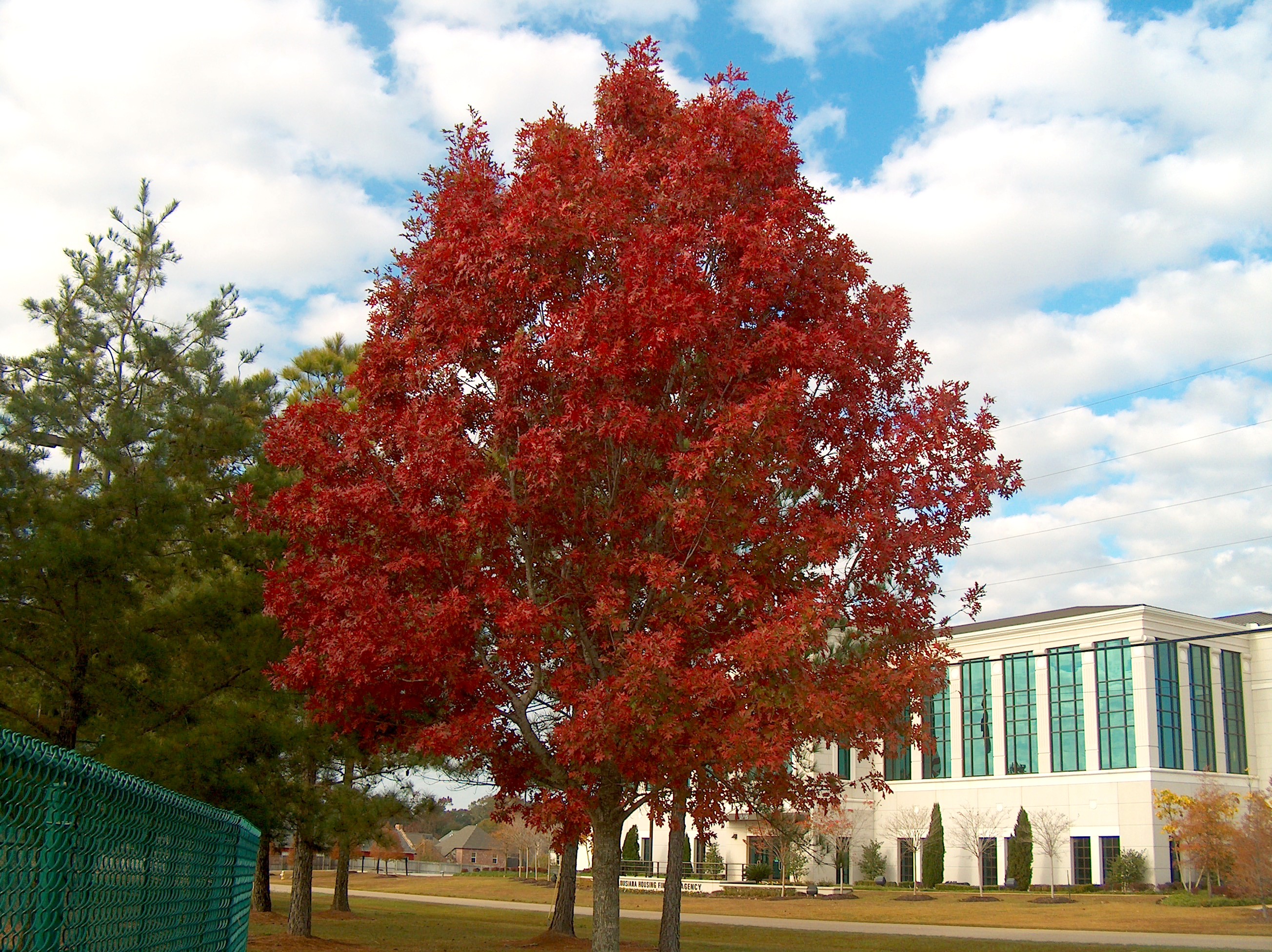
Shumard Red Oak
a native and widely planted tree; not to be confused with northern red oaks or pin oaks, both of which will not grow in our soils


Happy Halloween!


LED Christmas Lighting - Time to Plan Now!


I know, I know, we haven’t even gotten to Halloween yet and retailers are already pushing Christmas. We are not jumping on the marketing bandwagon, but since we are only taking a limited number of new properties for Christmas lighting, we want you to have the info you need to plan your project and get on the schedule. We continue to recommend Seasonal Source LED lighting.

Why Seasonal Source LED?
  • LED is green technology, consuming about 80% less electricity than traditional. You save money every year you use them.
  • Tired of testing your strings of lights every year only to find half of them don’t work anymore? Our lights are premium grade and ruggedly constructed with a 3 year guarantee.
  • Our LED lighting provides a dazzlingly bright display with brilliant jewel-like colors that never fade, chip, or scratch. You can choose from traditional warm-white to an array of festive colors.
  • LED are safe and cool to the touch.
  • Do more with less. Let’s compare the energy savings: On roof lighting, we typically use the C9 bulb. With LED, 100 ft of roof line will use less electricity than a single 100 watt light bulb. 100 ft of traditional incandescent Christmas lights will consume more power than a 600 watt microwave! When wrapping trees or columns with mini-lights, we can plug up to 300 23 foot long strings into one outlet! Compare with only 35 strings of traditional mini lights.

It's easy to see:

You can cover more area with a huge reduction in electrical costs, or increase your display without dangerously overloading your electrical circuits.


What do we provide?

We can provide everything for your outdoor display, custom designed to fit your home, including mini lights to wrap trees and shrubs, C9 roof lights, lighted wreaths and garlands, and all the jumpers, cords, and timer needed to make it all work. After Christmas, we will come out and place the lights in stackable storage boxes with tags and a diagram so that installation the following year will be easy to duplicate.

What does it cost?

We will measure your roof, trees, shrubs, sidewalks—whatever you want to highlight and provide an estimate and design suggestions. Once you have purchased your lights and supplies from us, we have a simple labor rate to cover installation and take down.

Labor
  • Lining driveways, sidewalks, etc.: $2.00 per ft
  • Single story roof lines: $3.00 per ft
  • Second story roofs: $5.00 per ft

Materials
  • C9 roof lights start at $2.75 per ft including wire and clips
  • Storage boxes are $10.00 or you can provide your own
  • Wrapping tree trunks, shrubs, etc.: 23 ft strings of M5 or G12 mini lights run $25.00 per string. If you already have the lights it is $6.00 per string for labor only.

For estimates, contact Mike Johnson.


Another of John's Favorite "Weeds"


You may have noticed tall white “weeds” showing up along our roadsides and pastures during the last few weeks. A closer inspection reveals that they are actually a beautiful euphorbia, Agaloma marginata or Snow on the Mountain. Similar to a poinsettia, the flowers are tiny and somewhat inconspicuous but are surrounded by showy white bracts with green stripes. Natives like these are important sources of nectar for pollinators like our endangered honey bees.


October Chores


  • Mow less often as the lawn slows down

  • Water once—twice a week as needed

  • Treat fire ants—bait products work well in Fall

  • Overseed rye and fescue grass

  • Apply weed pre-emergent and fertilizer

  • Sow wildflower seeds for spring 


Our goal is to fulfill the needs of the customer by providing timely, quality services and products.
Thanks for your business!


Spencer Young
Pool and Water Garden Services

Thursday, November 10, 2016

Prime's Clippings November 2016


Time To Order Bulbs!  

If you want a beautiful spring show of annual tulips, daffodils, paper whites or jonquils, now is the time to order them! Tulips are $90 per 100 bulbs installed, and daffodils are $1.50 each with a minimum of 100 bulbs. We will be picking up our bulb orders this month and start planting after Thanksgiving. Call to place your order today!

Not sure what to plant? Email john@primelandscapeservices.com


Winter Can Wait

I know, I know, it’s November, but- this is Texas! Our fall weather is just getting started! It’s possible we might get our first freeze around Thanksgiving, but in general we can expect more mild weather for the next 2 months.

We haven’t seen a lot of rain this October, but there’s been a few good soaks. In spite of the cooler temperatures overall, it’s remained pretty warm during the day these last couple weeks with temps in the mid-high 80s, but hopefully that is about to change.

This is a great time to get plants in the ground and give their roots a chance to develop through the winter, but keep them well watered until we get more regular rain fall. We have pansies going in all month long, so please call or e-mail us at contactus@primelandscapeservices.com if you’d like to schedule your fall color.

It’s pretty splendid weather for doing outdoor chores, but if you aren’t big on chores, remember that’s what we’re here for! So dig this fall weather and leave the real diggin’ to us.


Pansies and Violas are going in now! 


Call to schedule! 


Residential Mowing Clients - Please Read This!

With lawns growing slowly now and leaves starting to fall, please call us if you’d like to make changes to your mowing schedule!

If you do not want your yard mowed, let us know. We maintain several hundred properties, and they all have different needs. Some folks don’t mind letting leaves gather for a few weeks before cleaning them up and some folks prefer to have their sidewalks blown and leaves mulched up every week.Therefore, we do not let our crews decide which yards can be skipped on their list — all their work orders must come through our office.

Crews are paid for every minute of the day, and gas is expensive.

If you do not call in to cancel by 5:00 PM the day before and our crew comes to your house on your regularly scheduled day, you will be charged—no exceptions. 


AND IF YOU HAVE TREES, PLEASE READ THIS!


Every year we like to remind our clients about how we handle leaf clean ups. Leaves are starting to fall, and mulch mowing them into the lawn is the most cost effective way of dealing with them as long as it is done regularly. Soon there will be some really heavy leaf drops and we may need to spend extra time to clean them up if you have a lot of trees. We appreciate your business, and we will always try to work as quickly as we can to keep the cost reasonable, but please note:

WHEN A CREW HAS TO SPEND MORE TIME THAN THEY WOULD FOR A REGULAR LAWN MOWING, WE WILL BILL YOU HOURLY FOR THE CLEAN UP SERVICE.OUR HOURLY RATE IS $38.00 PER MAN HOUR.


(Not applicable to properties that are on pro-rated 12 month contracts that include leaf removal) 


Daylight Savings Reminders

Don't Forget Your Sprinklers!

We haven't seen a ton of rain coming into November, but the cooler temperatures mean we still don't need to run those sprinklers quite as much as we did a month or two ago. Make sure your new shrubs, trees, rye grass, and pansies are getting watered in adequately, however, be careful not to let your soil become too saturated as roots will actually suffer until they dry out a little.


We've seen quite a few yards this month where sprinklers weren't cut back and soil conditions were perfect for lawn diseases like brown patch. If you notice brown circular areas in your lawn call us for a treatment. If wet conditions persist this fungus will spread and cause serious damage to your turf. 


You may also see signs of Take All Patch in St Augustine. There is no full cure for this devastating disease, but a fungicide treatment and applications of peat moss and sulfur to increase acidity are the recommended controls.

Remember to adjust the clock on your sprinklers and replace the batteries in your smoke detectors and sprinkler controller on the weekend that we roll our clocks back for daylight savings time. It's an easy way to remember this simple chore. Note, not all sprinkler controllers have a replaceable battery. If you aren’t sure whether or not yours does, call us for the answer.


Another smart thing to do this time of year is test your rain/freeze sensor. Verify after one of these rains that your red light is on and the controller is inactive. As soon as the temperature drops below 40 the light should also come on to keep the clock from running and creating an ice hazard for cars or pedestrians.
This is especially important for commercial properties due to the high liability they may incur, and rain/freeze sensors are required by law for all sprinkler systems. So if yours is not working properly or if your system is so old that it doesn’t have one call us to schedule a service call.


Fall Water Garden Services

Leaves are dropping regularly and are probably the biggest challenge in maintaining a naturalistic water feature.
It is important to empty the skimmers and keep the leaves scooped out regularly. Clogged skimmers cause a myriad of problems, cutting off flow to the pump, and causing fill valves to run excessively since the water level drops in the skimmer.

Since water plants are starting to go dormant, one solution for shaded ponds is to cover the pond with a leaf net using tubing to suspend the net off the water. We can custom fit a leaf net system to virtually any pond. 


Email spencer@primelandscapeservices.com for more details.


November Chores:

  • Mulch mow leaves as they fall
  • Treat fire ants with baits
  • Mow over-seeded rye lawns weekly
  • Apply granular sulfur to buffer our alkaline soils
  • Change batteries in smoke detectors and your sprinkler controller when you change your clocks to daylight savings
  • Don’t forget to feed the birds!


Friday, November 1, 2013

Time to Order Bulbs

If you want a beautiful spring show of annual tulips, daffodils, paper whites, or jonquils, now is the time to order them! Bulb prices start as low as $.75 each installed with a minimum of 100 bulbs.

We will be picking up our bulb orders this month and start planting after Thanksgiving. Call to place your order today!

Not sure what to plant? Email us!

Beautiful tulips in bloom