Showing posts with label fertilizer. Show all posts

Tuesday, September 4, 2018

Prime's Clippings September 2018

Photo of Silver Nightshade courtesy of John Pavelka on Flickr
photo courtesy: John Pavelka
Silver Nightshade, Solanum eleagnifolium
A beautiful late summer 'weed,' blooms even during a drought


Hurry Up Fall- It's Hot!


Although we had a nice big rain event in mid August- and one to start September (woohoo!)- this has been a very hot, dry, challenging summer season for north Texas gardeners. I can’t say enough good things about the rain, let's hope we continue to see more. We have been running a rain deficit all year and have had brutally hot temperatures, setting several new records. Any rain is good rain, and that should ring true for the rest of the year or until we finally get some major moisture.

Up north, fall dependably begins in September when the kids head back to school. Around here, be prepared for another two months of hot weather. We should catch a break in October, but our lawns and plants don’t know that fall officially begins September 22nd. They just know they haven’t had enough to drink all season.

Regardless of the eventual onset of cooler weather, September and October are two very important months for north Texas gardeners.

Probably the most important chore coming up is the application of fall pre-emergent weed preventative to our lawns and beds. Equally important is a fall fertilization with a balanced product including potassium for the roots. Some gardening experts will tell you there is a perfect range of days in which to apply pre-emergent, but in truth that range can be quite extensive, and even applications outside of the peak period can be effective. But if you are a do-it-yourselfer, this is the single most important application you can make. Don’t forget to do it!


Fall veggie gardens can be a bright spot at the end of this tunnel of heat. There are a number of veggies you can plant from seed and transplants over the next few weeks and then enjoy harvesting when our milder weather finally returns. Check out this easy guide from Texas Agricultural Extension Services: http://dallas-tx.tamu.edu/files/2010/06/Vegetable-Planting-Guide.pdf

It is also nearly time to plant shrubs and trees again. So take heart! Next month we will hopefully be talking about fall weather.


Winding Down a Challenging Summer

This was a record year for temperatures and seemingly for chinch bug damage as well. I have never seen so many chinch bug problems. They will remain active as long as it remains hot, so if you see a dead patch starting in your St Augustine check for a sprinkler problem and then treat immediately if chinch are present. I had 4 different patches of chinch bugs in my own yard and have never had them before.

Grub worms can still be treated too and we are starting to see infestations and some damage. Grubs do some of their worst damage in the fall but as soils cool they move deeper into the soil, becoming harder to control. Treat now!

We are still several weeks from lawns starting into dormancy so continue to mow weekly and water regularly. See the tips above regarding fall pre-emergent and fertilizing. You may make applications at any time now.

Avoid trimming spring blooming plants like azaleas and spiraeas any more this year as you may be removing spring blooms. Also avoid high nitrogen fertilizers on spring bloomers, but you can still use balanced fertilizers and especially iron or acidifiers for chlorotic plants.

If we get into a wet spell, watch for lawn diseases like brown patch (later) or gray leaf spot (now), and powdery mildew, fungal leaf spot, and scale insects on shrubs. Treat as needed depending on severity so your lawn and plants go into winter healthy and happy.


Rye and Fescue Seeding

Time for our annual reminder about over-seeding your lawn with ryegrass. There are two types of rye seed available, annual and perennial. Annual rye seed is the one most commonly used but will need to be mowed every week in the spring. Perennial rye is more refined, with a darker green color and slower rate of growth, is more difficult to germinate. In our area the term perennial is not accurate. Most rye burns out by June. In shady areas or if we have prolonged cool, wet weather into the summer, ryegrass may persist longer.

The normal preparation for over seeding is to mow the lawn a few notches lower and remove the clippings during the last half of September through October. This allows the seed to make better contact with the ground and improves germination. The seed should be watered several times a week until it is up and growing. In about two weeks lightly touch up any thin areas. Once it is up, mowing will vary depending on the weather and type of seed used, but once every 2-3 weeks is usually the norm until about March. Light fertilizing in December will enhance the appearance.


Pricing: Scalping, over-seeding, and touch up is based on square footage and will run around 8 times the cost of a normal mow. If your mowing is $35, your annual rye installation will be $280. Perennial rye would be $52.50 additional.

For larger or commercial properties call or email us to request a quote.

Fescue is a northern grass that struggles here in July and August, but there are transitional mixes now that are an option for heavily shaded yards where St Augustine just will not make it. If you have heavy shade and prefer a lawn there instead of groundcovers or a shade garden, then fescue may be a fit for you. Like rye, it will germinate now and establish during the winter and spring months. As mentioned, it thins out in our hottest months and does need regular watering, but simply reseed each fall to thicken it back up. Fescue does not need to be mowed as often as rye.

We have found an excellent way to install fescue is to aerate the area with a core aeration machine and then broadcast the seed. This is especially effective on slopes where seed may wash.

We only recommend fescue for shaded areas where you are having trouble growing St. Augustine. The pricing is based on square footage with a minimum of $250.


Upgrade Your Commercial Facility To A Hydrawise Smart Wi-Fi Irrigation Controller and Save $$$


Wi-Fi based sprinkler controllers have been making headway in the residential market for the past few years. The drawbacks have been dependability and a limited amount of zones that could be utilized, making them unsuitable for our typical commercial properties. Now there are finally some good choices for commercial and larger properties.

What is the Hydrawise Smart Wi-Fi controller? Hydrawise is a new line of controllers by Hunter, a long-time leader in commercial and residential irrigation products. Hunter is the preferred controller for a large segment of contractors, Licensed Irrigation designers, and Landscape Architects due to their dependability, ease of use, and functionality. Approximately 90% of our properties have Hunter controllers. The new Hydrawise controllers are connected to the internet through your Wi-Fi signal and allows you and your contractor/installer to monitor and program your sprinkler system from a home or office computer, laptop, tablet, or phone anywhere that you have internet access. Additionally, it is connected to local airport or independent weather stations giving it both real-time and predictive weather capabilities.

State law currently requires that controllers be equipped with rain and freeze sensors so that they do not run when temperatures are below 40 degrees or there has been a measurable amount of rain. This is of course to reduce water waste and prevent accidents and injuries due to ice forming if it drops below freezing when the sprinklers are going to run. Although this is helpful, using both real weather data from a nearby station and the forecasted temperature and rainfall add another layer of safety and water savings potential, and eliminates the inherent fallibility of sensors. Obviously weather forecasting is also fallible, but you can select a wide parameter of settings for predicted rainfall or temperatures to manage your application.

The controller will also let you set programs based on actual weather data rather than just a time based schedule. Using this function or setting good predictive settings can lower your water usage. And this weather based system provides the best security of not having a sprinkler run before freezing weather comes in, reducing your liability for ice related accidents.

A flow sensor device is another enhancement available for properties with up to a 2 inch mainline. This can be installed into the plumbing and will alert the controller and the users of a potential leak. On older systems that are prone to frequent breaks or valve failures this can pay for itself in just a season or two.

The Hydrawise is suitable for residential as well, capable of working with any system from 1 to 54 zones. For a quote on upgrading your system, email us or call and ask for Mike or John.


September Chores


  • Mow weekly and do not bag clippings
  • Treat fire ants
  • Overseed rye grass
  • Apply weed pre-emergent and fall fertilizer
  • Sow wildflower seeds for spring


John Hoover
General Manager


Our goal is to fulfill the needs of the customer by providing timely, quality services and products.

Thanks for your business!


Friday, September 2, 2016

Prime's Clippings September 2016


Fall is on the Horizon


August gets a B this year, with our hot streak taking a rain break around the middle of the month and evenings dipping into the seventies. As the heat begins easing we can get back to enjoying our yards and start our fall gardening projects.

I get as excited about this time of year as I do spring, and it always seems to fly by just as quickly. Get those fall veggies planted, prune out the sun burnt stuff, and get the fall pre-emergent and fertilizers put out. Plant trees, shrubs, groundcovers, and new lawns, but we have to control ourselves and hold off on pansies until no earlier than mid October.

You should have plenty to do as the days get shorter, and soon enough you’ll be able to enjoy a cool evening around your outdoor fire pit.

Wait, you don’t have one of those yet? Hmmm, maybe you better give us a call!


Fall Pre-Emergent and Fertilizer- The Most Important Application


If you are a regular reader you already know this drill, but we have to repeat it for newbies. 


This is an important message!


If you are on our regular lawn application program you will be receiving an application of pre-emergent weed control in September-October. If you are not on our full service program, call today to schedule. This is the most important lawn application of the year! Winter weeds begin germinating in September and October depending on weather conditions and may not be noticeable until spring. But for the best chance of reducing those unsightly weeds you see in March, you must treat the seeds now!

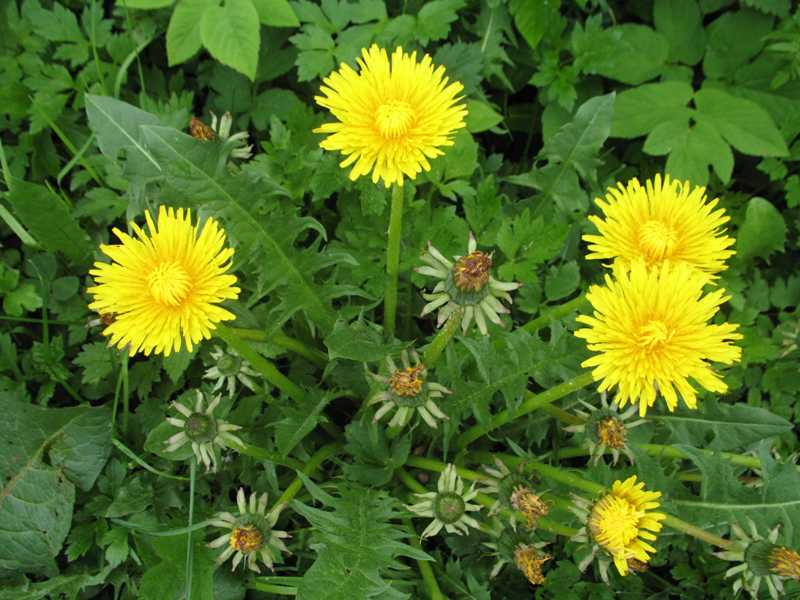
Dandelions, thistles, henbit, chickweed, oxalis, rescue grass, and poa annua are the biggest culprits in our spring gallery of weed problems, and most of these start sprouting when soil temperatures at the surface drop below 70 degrees. It doesn’t take too many days of cool cloudy weather to achieve this, so timing is critical. 

Pre-emergents do not provide 100% control, but they will make a big difference. They work by creating a chemical barrier in the soil that kills the seedling as it starts to emerge. This application may be combined with a broadleaf weed killer to control any that have already sprouted. Heavy rains or wet winters dilute the chemical barrier sometimes reducing effectiveness.

Our fall application also includes fertilizers to get your lawn ready for dormancy. Nitrogen helps thicken the lawn and smother weeds, and potassium builds stronger root systems to help your lawn through hard freezes and promote early green-up in spring.


A Couple Observations


We have recently noticed some early leaf drop, particularly on American elms. A close look reveals fungal leaf spot covering the foliage, likely due to the recent rain events and high humidity. Nothing to be done about it except mulch up the leaves as they fall. 


We have also seen random branches dying back on some big oaks. Squirrels had girdled the limbs chewing the cambium under the bark... guess they’re running low on nuts. Seems nature is always throwing us a curveball. 


Late Summer Lawn Care


Last month we reminded you that grub worms are most vulnerable in August and that is an optimal time to treat. The window is still open for a few more weeks and then the grubs will move deeper into the soil and also become larger and tougher to kill. Call ASAP if you want a grub treatment.


As evenings start to cool in late September and on through November, watch for irregular circular brown spots in St. Augustine during rainy weather. Brown patch is a common fungus that can do severe damage to your lawn going into winter. Take-all patch also becomes active in fall. If you had areas that were stunted and slow to green up in the spring you may have take-all patch. 

Topdressing the lawn with peat moss to increase acidity at the soil surface is an organic remedy for take-all, and there are chemical fungicides for brown patch. 

Spurge is a flat broadleaf weed that sprouts in July-August after a good rain. Fast growing and difficult to control, this is the dominant weed problem we are seeing at this time. Your next application will contain a broadleaf spray to help control this if you have any in your lawn. One reason that late summer weeds like spurge are hard to control is that most herbicides will damage the lawn in hot weather. Celsius or similar sulfonylurea herbicides are about the only option for weed control with minimal turf stress.


Moonflower- A 'Weed' Worth Considering


You may be familiar with the white flowering morning glory called Moonflower vine, Ipomoea alba, which opens at night and may be found in nurseries. And although I’ll give this fine vine a tip of the hat, there is a native shrubby perennial that can be even showier and requires no special care- Datura, aka Jimsonweed, Moonflower, or Thorn–apple.


There are 9 species of Datura, Datura wrightii is the most likely one to find growing wild in our area, but they don’t seem to be common. I found one some 38 years ago growing in a field in south Arlington and still have it’s progeny in various spots in my gardens.

Granted, it seeds prolifically and needs to be contained, and all parts are poisonous, so you might avoid it if you have small children. But it is happy in a well drained soil with virtually no water, and I simply cut my seed pods (the thorn-apples) off periodically before they open to reduce having to weed out unwanted additions. The huge flowers audibly pop open at dusk and are the preferred nectar of the hawk moth. 

Not a plant for everyone, but worth a look for the adventurous. 


Ryegrass and Fescue Season Starts in September


Over-seeding with ryegrass for the winter sets your home or business apart from the crowd. Over-seeded lawns normally have fewer winter weed issues as weed seeds have a difficult time germinating in the thick green cover provided by healthy turf. Typical winter weather usually brings enough rainfall to keep your rye green with little or no supplemental watering once established. 
And a green winter lawn creates a nice foreground or background for early spring flowers such as daffodils, dogwoods, Mexican plums, azaleas, and spiraeas.

There are 2 primary types of rye seed available, annual and perennial. Annual rye seed is the one most commonly used but will need to be mowed every week in the spring as its rate of growth is quite fast.

Perennial rye is more refined, with a darker green color and slower rate of growth, but sometimes is more difficult to get it to germinate. In our area the term perennial is not accurate in regards to rye, as most burn out by June. In shady areas or if we have prolonged cool, wet weather into the summer, ryegrass may persist longer. 

The normal preparation for over seeding is to mow the lawn a few notches lower and remove the clippings during the last half of September through October. This allows the seed to make better contact with the ground and improves germination. Depending on rainfall, the seed should be watered at least twice a week until it is up and growing. Once it is up, mowing requirements will vary depending on the weather and type of seed used. Mowing once every 14 days is usually the norm until about March. Light fertilizing in December and February will really enhance the appearance, especially if we are having a dry winter.

Call us for a free quote if you would like a lush green  lawn this winter.

Fescue is a northern grass that struggles here in July and August, but there are transitional mixes now that are an option for heavily shaded yards where St. Augustine just will not make it. If you have heavy shade and really prefer a lawn there instead of groundcovers or a shade garden, then fescue may be a fit for you. Like rye, it will germinate now and establish during the winter and spring months. 

As mentioned, it thins out in our hottest months and does need regular watering, but simply reseed each fall to thicken it back up.


September Chores


  • Mow weekly and mulch up leaves
  • Water weekly
  • Treat fire ants
  • Overseed rye grass
  • Apply weed pre-emergent and fall fertilizer
  • Sow wildflower seeds for spring


Tuesday, April 5, 2016

Prime's Clippings April 2016

Gold, white, red, and a little bit of lavender Lantana

Looking Forward to a Great Spring

With regular rains and cool nights, spring is starting off nicely, except for those of us that were caught in the hail storms. There is lots of color showing up on roses, wisteria, spiraea, and azaleas, and trees are budding out everywhere. With the warm winter I noticed several plants blooming weeks earlier than normal, including bluebonnets and bridal wreath. Pansies have held up well this spring in most places, but a few have been lost to aphids or wet soils last fall. I hate to see them go, but it’s about  time to start changing out to summer color. 

So what might this year bring? More floods, drought, bugs, blooms, or all of the above? It's as hard to predict how our gardens will perform as it is to predict our weather, and of course they are inexorably entwined. At least the rains have filled area lakes and our soil moisture levels are good, so we will start the 2016 gardening season in reasonably good shape. 

April is absolutely the busiest month of the year for gardening, so please be patient with us if we can’t always get to you right away- we promise to do our best!


How to Water Newly Planted Shrubs

A reminder to anyone planting new shrubs and trees. Although sprinkler systems will supplement rains adequately on lawns and established plants, most new plants need to be thoroughly soaked once a week until they get established and very few sprinkler systems are capable of soaking an entire root ball.

This means that if you do not receive a good soaking rain every 6-10 days, you need to get the old water hose out and hand water your new plants weekly. 

The bigger the plant, the more important this is. Most plants like a well drained soil, so container grown plants are usually planted in an organic mix that drains very well. Nurseries water most plants daily as going without water for even a couple days can dry out the root ball to the point of damaging the plant. 

When your new plants are taken from that container and placed in soil, the same effect can be seen, although not quite as rapidly. When a healthy plant fails within just a few weeks of installation, 95% of the time it is due to that root ball being allowed to dry out. We’ll chalk up 4% to the other culprit, over watering, and 1% to a damaged root ball. So please help us keep your new plants looking good by watering correctly!


Almost Time for Summer Color

Start making plans now for your summer color!


Mixed colors of Pentas
We are planting petunias now for a big show through May, and then around mid-April we will start planting summer flowers so they can get rooted before hot weather. 

There are so many choices, but low maintenance plants that are not too finicky work well for most of us. Few people have the time or inclination to constantly check and treat for insects or diseases, and we need plants that can outlast a long summer season with extreme temperatures. 

So with this demanding criteria, here are some proven winners and appropriate applications for them. 

Gold, white, red, and a little bit of lavender Lantana

Full sun or afternoon sun areas: 

Lantana is hands-down the toughest choice for high heat, and the absolute best choice for dryer beds. Some folks think lantana can get a little unruly, but there are new compact dwarf varieties that really perform. Pentas are another heat lover with few problems, and for big accents use purple fountain grass, esperanza, and sun coleus. Scaevola is a great trailing plant in lavender or white, and Blackfoot daisy is a fragrant mounding/trailing plant—both great for rock walls, containers, or borders. Periwinkles love the heat but cannot be planted here until about mid-May due to pythium and rhizoctonia root rot when nights are cool or it is too wet. Dwarf zinnias can have similar issues if planted too early. Sweet potato vines are another great accent as long as you have the space for them or the time to periodically cut them back, and artemesias such as Dusty Miller or Powis Castle provide silvery foliage. Other choices for sun include Angelonia, Blue Daze, Moss Rose, and Purslane. Bronze begonias tolerate sun or shade so are great for those places that go in and out of the sun, but they struggle with uneven moisture, and with twice a week water restrictions it can be hard to keep them looking good in July-August.

Impatiens with just the right amount of sun

Shade areas:

In the shade, caladiums and begonias are king with impatiens close behind. Impatiens need a little light to look good all summer. In heavy shade they tend to get leggy in July-August. Caladiums also need consistent water and once they start withering they take a long time to recover. 

Dragon Wing Begonias


You can also use foliage plants like shade coleus, Japanese painted fern, alternanthera, or lamium. 


We have had great luck with Dragon Wing Begonias in shade despite uneven watering.

Reminders


Email

Please call or e-mail us to start getting your invoices and statements via e-mail. We will never share your contact information or blast you with solicitations. It is simply the most environmentally friendly and efficient way to do business. contactus@primelandscapeservices.com


Scheduling

During the spring season, we have many homeowners with different preferences for their mowing schedule. If you are not on a 12 month pro-rated contract, please let us know when you want to start weekly services. Also please give at least 24 hours notice to change a regular service.


Lawn Problems

It has been a wet spring so far, and if April starts off cool and wet these are optimal conditions for brown patch, take-all patch, spring dead spot, and other fungal turf diseases. Keep an eye out for circular brown patches or yellowing and call if you think you have a problem. 

Monday, February 29, 2016

Prime's Clippings March 2016

A Record Warm Winter Creates Spring Challenges 

Last month I said I wouldn’t start planting begonias just yet in spite of the spring-like temperatures, but this has certainly been the warmest winter in many years. We could have planted lots of warm weather plants in February but the likelihood of a March freeze still holds true for another 20 days, so let’s try to be a little patient!

The recent rain was sorely needed, but weeds are now exploding onto the scene. Pre-emergent applications from the fall were only partially effective after being diluted with nearly 20 inches of rain in October – November. We are applying broadleaf control for plants like dandelion and henbit now and spot spraying for certain grassy weeds like wild rye. Remember though that most of these plants have begun flowering already and it takes at least 2 weeks and 2 applications to knock these weeds down. Our crews are busy cutting back roses, perennials, and grasses, and I hate to tell you but it is already time to fire up the mowers.

So here is our annual reminder: RESIDENTIAL CUSTOMERS! If you are not on a year-round contract, please call to let us know when you are ready for mowing or your spring clean up.  We don’t want you to wonder where we are, but we also have some clients that like to wait until late in March to start.

And not to be the bearer of bad news, but with less than half of our normal freeze days this winter we can probably expect lots of insect issues and an early crop of mosquitoes and fire ant activity. We will try to keep you informed as we observe these problems, but let us know if you need our help. We offer mosquito fogging, fire ant control that is guaranteed all season, and treatments for other pests we will see this year, such as bagworms, tent caterpillars, and chinch bugs.

Ready or not, we are into an early spring so hang on for the ride!


No Fire Ants For The Season - Guaranteed! 

Fire ants may be the most annoying pest of all. They do millions of dollars in damage each year to electrical equipment and agriculture, and swarm out when disturbed to inflict painful bites to children, pets, and any unsuspecting gardener.

Fire ants can migrate miles when swarming and tunnel up to 20 feet deep, so permanent eradication is not possible. However, we can treat your entire property with a long residual product that will eliminate existing colonies and create a barrier to prevent new swarms from moving in. When done in March, we guarantee control for 8 months!

Prices start at just $155 for a full year. Call for your free quote today and get 10% off your first year!


Pond Season Starting Up 

String algae season is starting early this year. As much as we love our beautiful water features, we pond owners hate string algae equally. Since aquatic plants have not come out of dormancy and cool water temperatures reduce the bacteria colonies in your filters and gravel, conditions are optimal for the growth of string algae. Algae is a natural, healthy organism in any natural water feature, but it can bloom suddenly in a matter of days and become unsightly.

We start our annual clean outs this month, changing the water, washing down the gravel, removing the sludge, cleaning the filters, trimming and thinning out water plants, and changing the water to get your pond started on the right foot for spring.

Give Spencer a call to book your spot for your spring clean out!


Thank You For Your Business

Spring is upon us in full force. We want to thank all our clients who started on their spring projects with us a month or two ago when we had a little more free time, and we appreciate the patience of all of you who are now calling in for landscape projects and having to wait for your estimate. We will do our best to get to whatever you need as quickly as we can.

We look forward to working with you in the coming season. And remember- email is a great way to communicate with us!

contactus@primelandscapeservices.com 


Monday, February 1, 2016

Prime's Clippings February 2016

75 Degrees on Jan. 30? Winter Must Be Over!

It may still be a little too early to pull out the bathing suit!

I wouldn’t start planting begonias just yet, but 75 in January? I imagine we will soon see our weather imitate the January stock market and maybe have some frozen precipitation before we see real spring weather. But these long warm spells play heck with plants in winter.

Watch for weeds to explode onto the scene in February, and trees may start to bud early. It is late enough now to cut back roses and ornamental grasses, but if this warm spell persists, a late hard freeze could knock some things back. But the day I can predict the weather a month out is the day I can tell where your stocks will be in a month.

We will be busy putting out our first winter weed application and remember that it takes at least two applications. Our crews are busy cutting back roses, perennials, and grasses, so please let us know if you are not already on a regular schedule for these chores. And if you are needing your trees shaped or cleaned up, we should schedule before they leaf out as it is much easier to see what really needs to be done.

My official prediction: Regardless of what the weather is doing, Spring will begin March 20. I don’t think I can go wrong with that one.


Our Annual Mulch Special Continues Through Feb!

Mulching your beds is absolutely the best thing you can do for the health of your soil and plants. Mulch reduces weeds, improves soil structure, conserves moisture, protects plants from extreme cold and summer heat, and gives your beds a neat appearance.

Take advantage now! Mention our newsletter for 20% off normal prices.


Don't Forget These Winter Chores

February is the month to transplant trees, shrubs, and many perennials. If you have something that doesn’t quite fit and has not been in the ground too many years, now is the time to find it a new home. Keep as much soil around the root ball as you can, and water with root stimulator and liquid fish/ seaweed emulsion.

While trees are still void of foliage, prune to remove mistletoe, low limbs, and perform corrective pruning for crossed limbs, weak forks, and other potential hazards. It is much easier to see what needs to be done when the leaves are off.

Cut back ornamental fountain grasses, roses, and groundcovers such as liriope and Asian jasmine this month. We are strongly recommending that everyone have their liriope (monkey grass) cut back this year. There is a fungal crown rot that is infecting liriope throughout the area. It is a serious disease that will slowly kill out large patches of your bed and has no practical chemical control. Cutting the plant back in late winter is one of the recommended preventative measures along with avoiding too much water.

This is also the time for severe pruning of overgrown shrubs, or shall we say perhaps a shrub that may not have been planted in the best location? Regardless, you can cut many shrubs back to wood now with a good chance they will leaf back out in spring.

Veggie gardeners have a lot on their plate this month. It is time to plant many cool weather leafy and root vegetables, including onions, carrots, kale, peas, broccoli, collards and most all greens, and even lettuce. You may still have to cover tender new plants a few times, but all of these are at their best before temperatures get hot.


A Serious Problem For Crape Myrtles

An extremely destructive  pest is troubling crape myrtles in north Texas. This is a type of felt or bark scale that is doing serious damage and is difficult to control.

Look for a black (sooty mold) coating on the bark of the trunk and on the branches. The insects appear as white, waxy encrustations likely to occur anywhere on the plant. Larger female scales "bleed” a pink liquid when crushed. Careful examination may reveal dozens of pink eggs under some of the larger white scale covers.

Texas A&M does not yet have a full treatment regimen, but dormant oil sprayed before the leaves emerge and a systemic insecticide containing imacloprid will need to be applied 2-3 times through the season.

If you have noticed the symptoms above, call for an evaluation and treatment plan.


Knockout Roses - Pruning and Rosette Disease

Knockout roses have become a mainstay of our local landscape both in commercial and residential settings. Knockouts are just  one of a number of Earth-Kind roses, a special designation given by Texas AgriLife Extension Service. There are numerous others including the smaller Drift roses.

Unfortunately, rosette disease has become widespread throughout the metroplex in just the last few years, and these once bullet-proof roses are just as susceptible as any rose to this deadly virus. Spread by a tiny eriophyid mite, the recommended treatment for diseased plants is to remove them and spray adjacent roses in hopes of controlling any mites that may be in the area. Since the mites may crawl from one plant to another, rethinking your rose bed so that plants have a little space between them may help prevent spreading the disease.

At the same time, it appears that the mites are also carried by the wind or even piggybacking on other insects, so there is no guarantee.

And there is also a possibility the disease may sometimes be located in only one section the plant and not systemic. If this is the case, it may be possible to prune out a diseased section and see if the plant recovers.

Does this mean that we can no longer enjoy beautiful roses in north Texas? No, we can still plant, but we must be vigilant in watching for symptoms and need to avoid large mass plantings.

Another subject is whether or not healthy Knockouts need to be trimmed.

Knockouts are  popular for many reasons- they are consistent bloomers throughout the season, they have attractive dark foliage that holds late into the winter, but their biggest attribute may be their ability to  perform with little care.

Although Knockouts can be enhanced by traditional rose pruning techniques, they really only need a serious pruning about once a year. They don’t require dead heading to encourage more blooms, but occasional shaping is perfectly acceptable throughout the season.

Tuesday, September 10, 2013

Late Summer Lawn Care

Last month we reminded you that grub worms are most vulnerable in August and that is an optimal time to treat. Well, we have seen several infestations, so you may want to consider treating now while the window is still open.

As evenings start to cool in late September and on through November, watch for irregular circular brown spots in St. Augustine during rainy weather. Brown patch is a common fungus that can do severe damage to your lawn going into winter. In fact, since take-all patch also becomes active in fall, you should consider a preventative fungicide application. We have professional products that are labeled for both problems, and it is much better to treat proactively. Once take-all patch has infected the roots, there is virtually no way to save the lawn.

Spurge is a flat broadleaf weed that sprouts in July-August after a good rain. Fast growing and difficult to control, this is the dominant weed problem we are seeing at this time. Your next application will contain a broadleaf spray to help control this if you have any in your lawn.

One reason that late summer weeds like spurge are hard to control is that most herbicides will damage the lawn in hot weather. Celsius or similar sulfonylureas are about the only option for weed control with minimal turf stress.

Reliving the 70s with a little help from his spurge

Fall Pre-emergent and Fertilizer - The Most Important Application

If you are on our regular lawn application program you will be receiving an application of pre-emergent weed control in September— October. If you are not on our full service program, call today to schedule.

This is the most important lawn application of the year!

Winter weeds begin germinating in September and October, and depending on weather conditions may not be noticeable until spring. But if you want the best chance of reducing or eliminating those unsightly weeds you see in March, you must treat the seeds now!

Dandelions, thistles, henbit, chickweed, oxalis, rescue grass, and poa annua are the biggest culprits in our spring gallery of weed problems, and most of these seeds will start sprouting when soil temperatures at the surface drop below 70 degrees. It doesn’t take too many days of cool cloudy weather to achieve this, so timing is critical.

Pre-emergents rarely offer 100% control, but they will make a big difference. Pre-emergents work by creating a chemical barrier in the soil that kills the seedling as it starts to emerge. This application is normally combined with a broadleaf weed post-emergent control to kill any that have already sprouted. Heavy rains or wet winters may dilute or move the chemical barrier deeper in the soil sometimes reducing effectiveness.

Our fall application also includes fertilizers to get your lawn ready for dormancy. Nitrogen helps thicken the lawn and smother weeds, and potassium builds stronger root systems to help your lawn through hard freezes and promote early green-up in spring.